Workwear Market Trends 2026-2027: PFAS, ESG, Reshoring
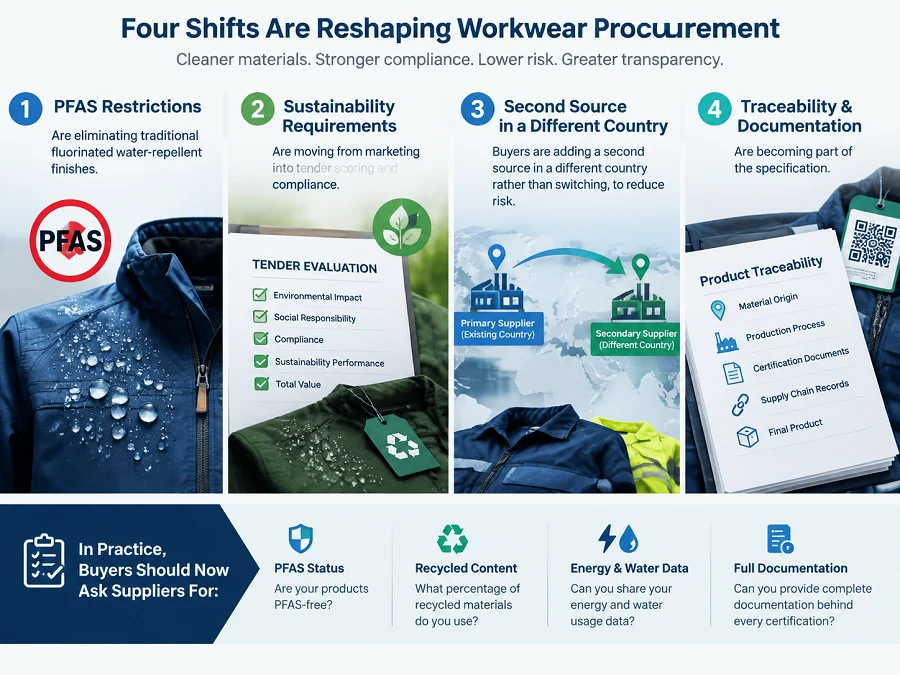
Four shifts are reshaping workwear procurement. First, PFAS restrictions are eliminating traditional fluorinated water-repellent finishes. Second, sustainability requirements are moving […]

Four shifts are reshaping workwear procurement. First, PFAS restrictions are eliminating traditional fluorinated water-repellent finishes. Second, sustainability requirements are moving […]
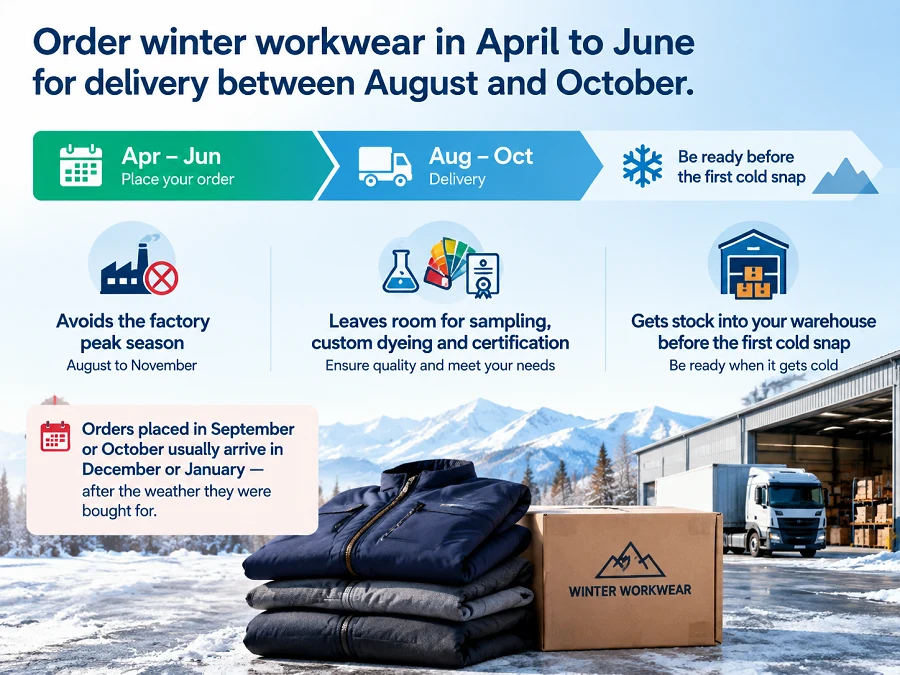
Order winter workwear in April to June for delivery between August and October. That timing does three things: it avoids
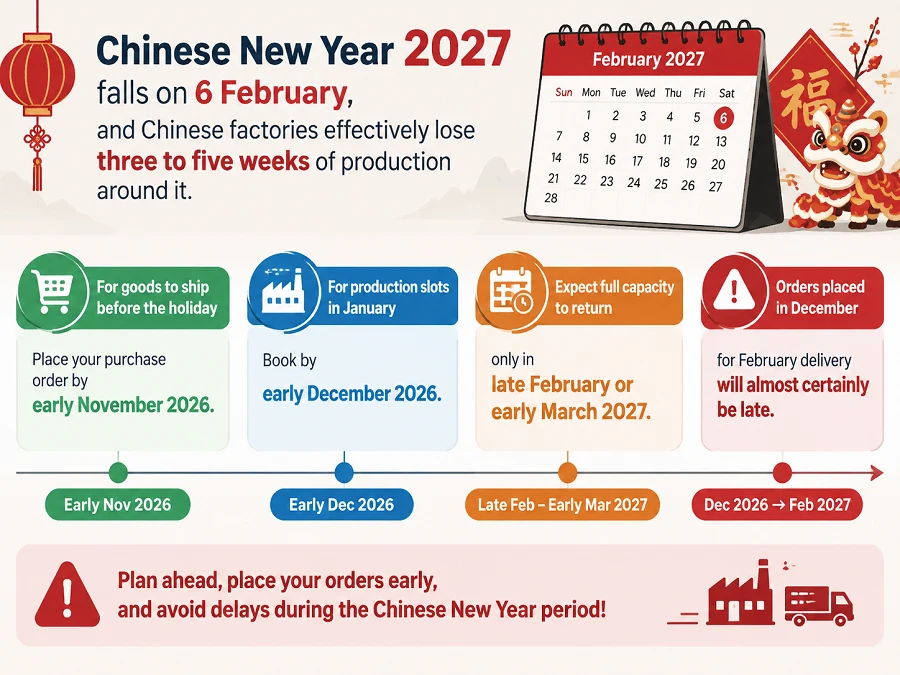
Chinese New Year 2027 falls on 6 February, and Chinese factories effectively lose three to five weeks of production around
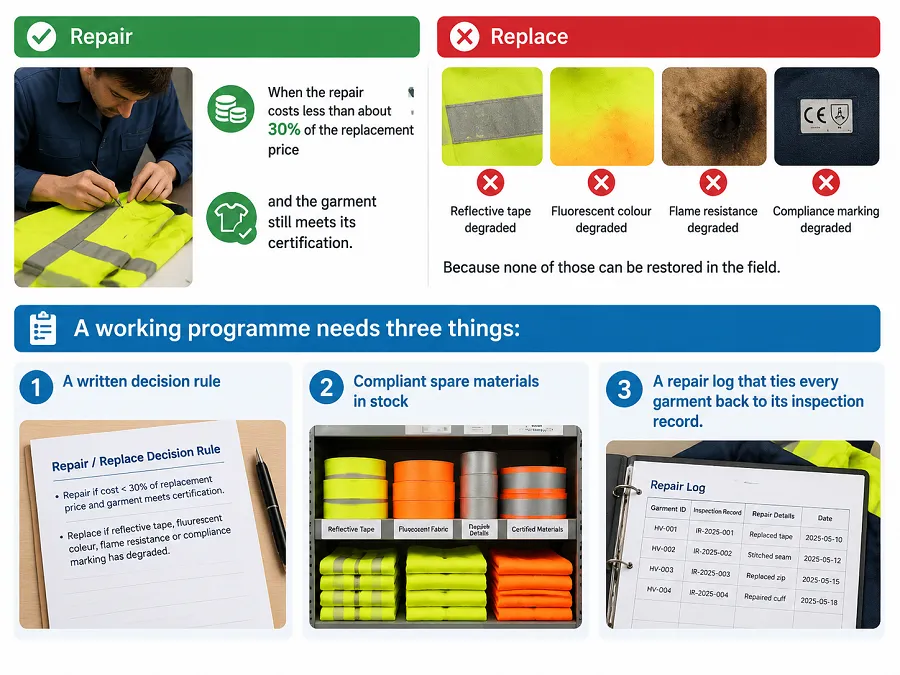
Repair when the repair costs less than about 30% of the replacement price and the garment still meets its certification.
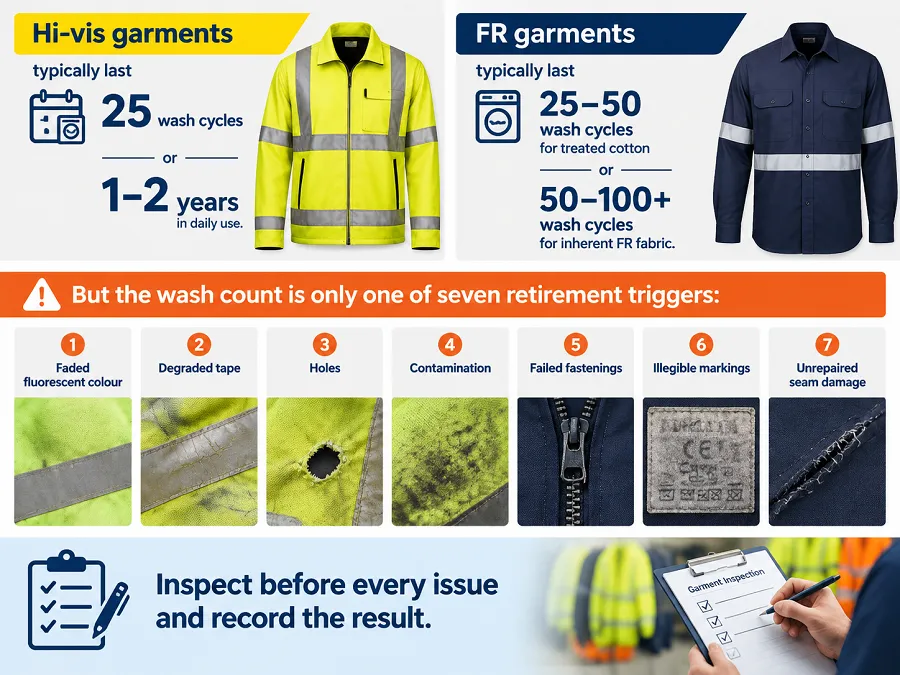
Hi-vis garments typically last 25 wash cycles or one to two years in daily use, and FR garments 25–50 cycles
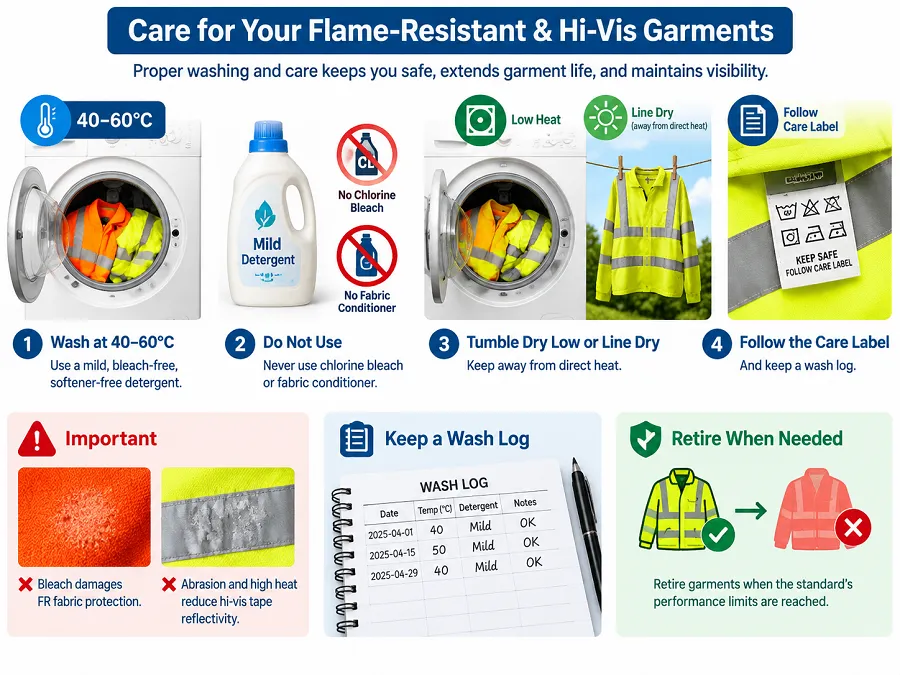
Wash flame-resistant and hi-vis garments at 40–60°C with a mild, bleach-free, softener-free detergent, never use chlorine bleach or fabric conditioner,
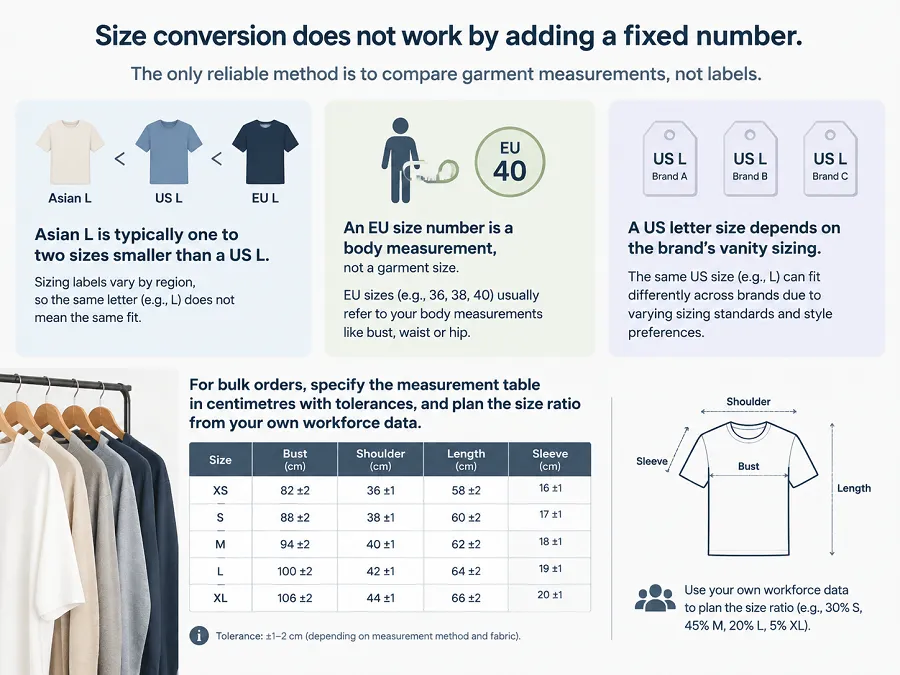
Size conversion does not work by adding a fixed number. The only reliable method is to compare garment measurements, not
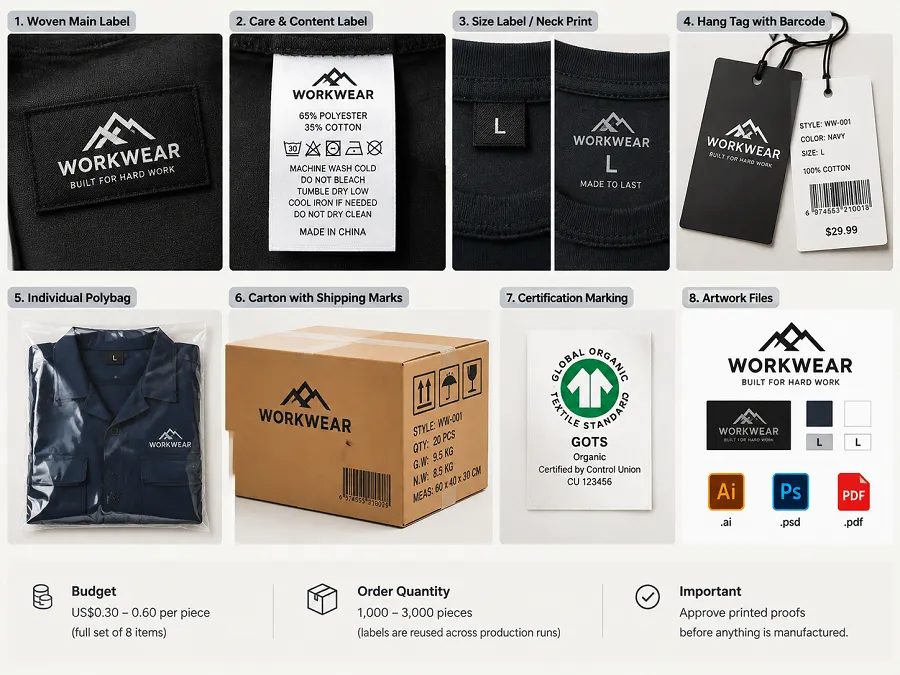
A private-label workwear pack needs eight items: a woven main label, a care and content label, a size label or
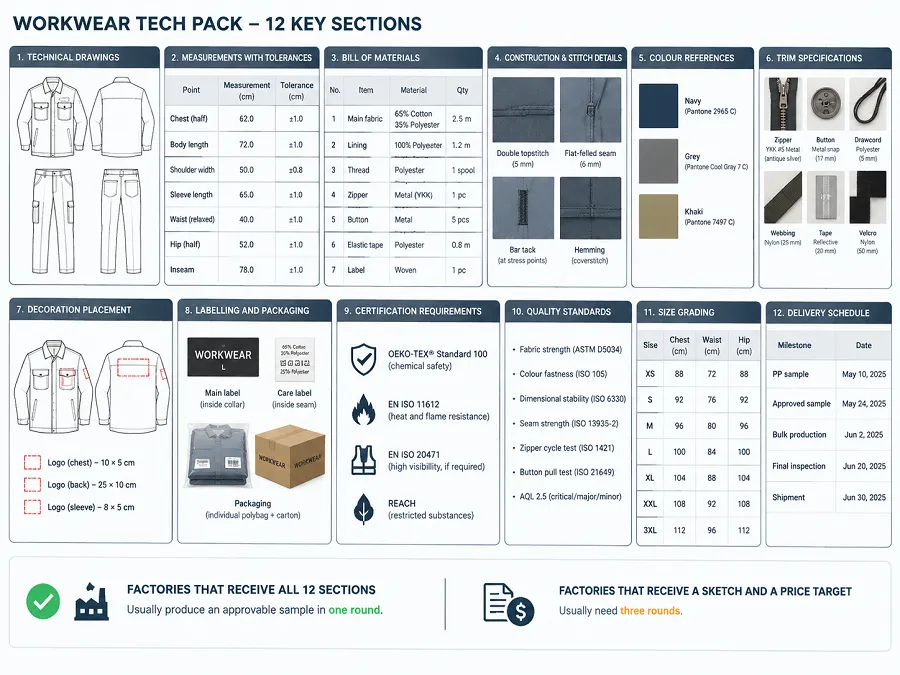
A workwear tech pack needs twelve sections: technical drawings, measurements with tolerances, bill of materials, construction and stitch details, colour
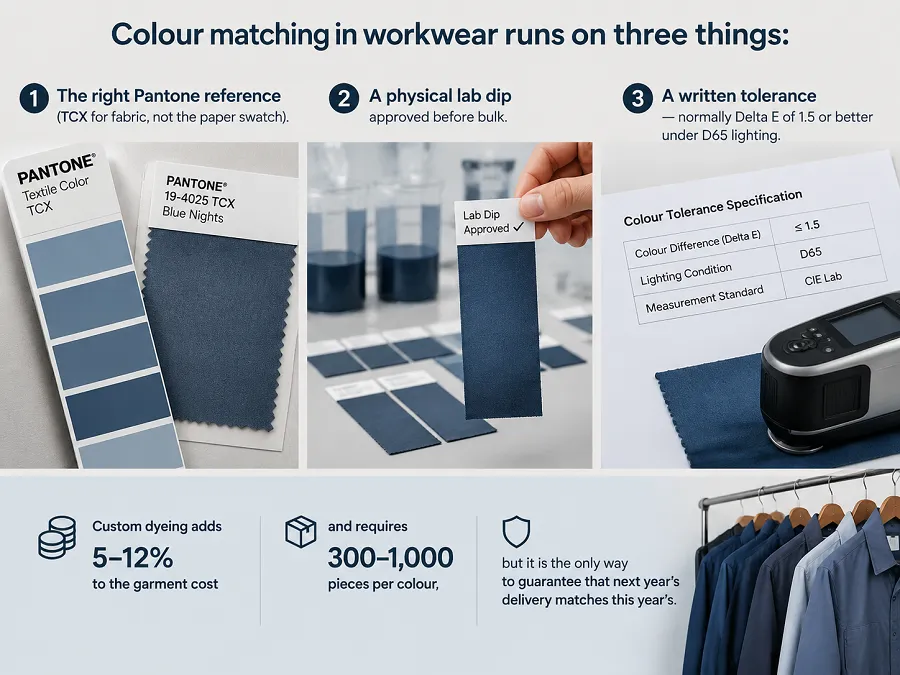
Colour matching in workwear runs on three things: the right Pantone reference (TCX for fabric, not the paper swatch), a
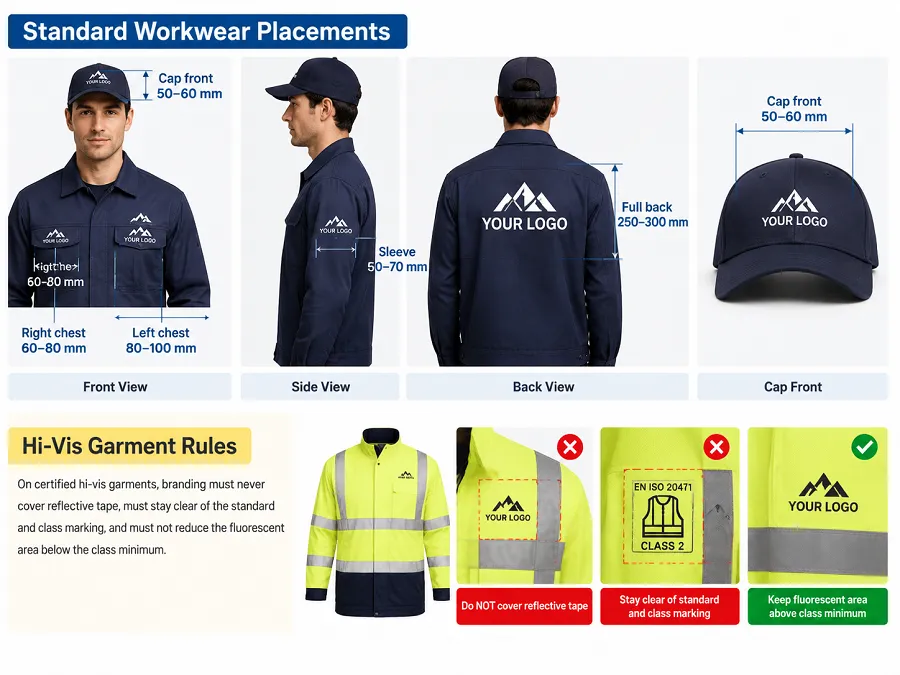
The standard workwear placements are: left chest 80–100 mm wide, positioned 70–100 mm below the shoulder seam; right chest 60–80
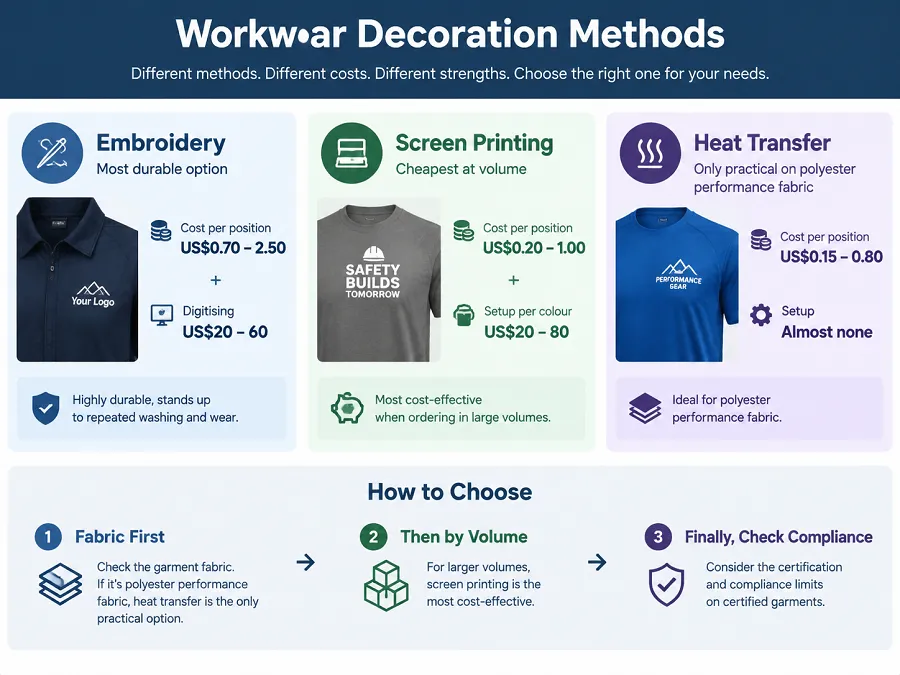
For workwear, embroidery costs US$0.70–2.50 per position plus US$20–60 digitising and is the most durable option; screen printing costs US$0.20–1.00