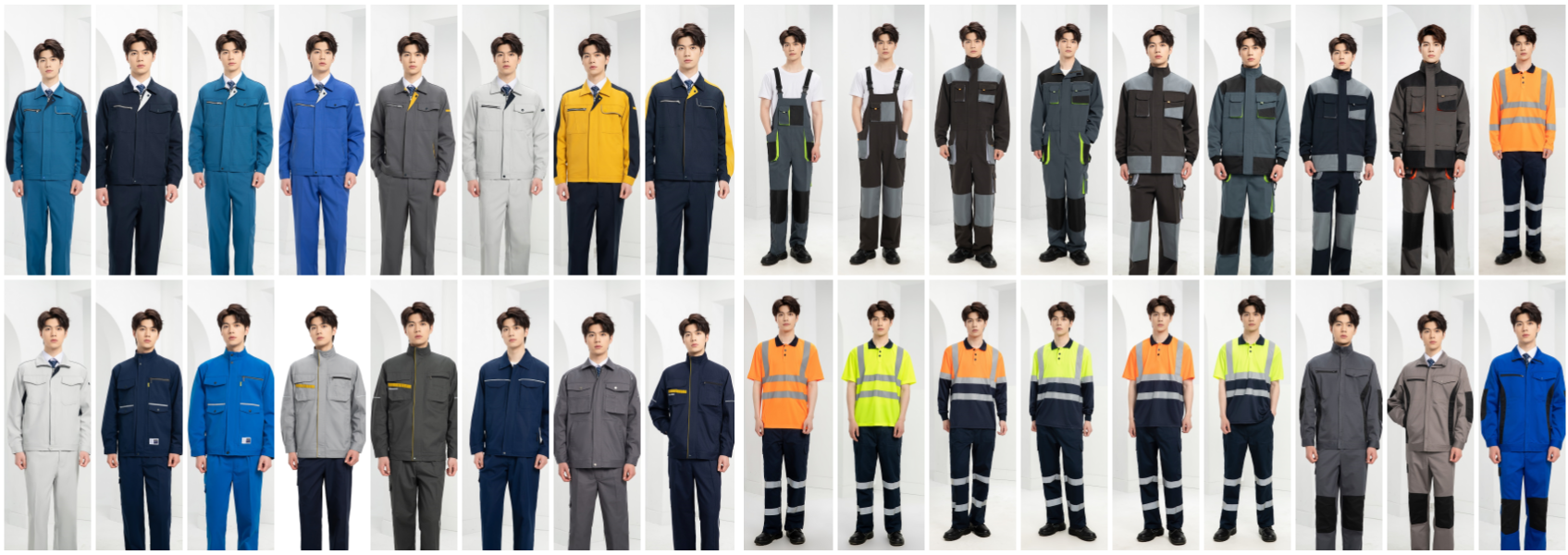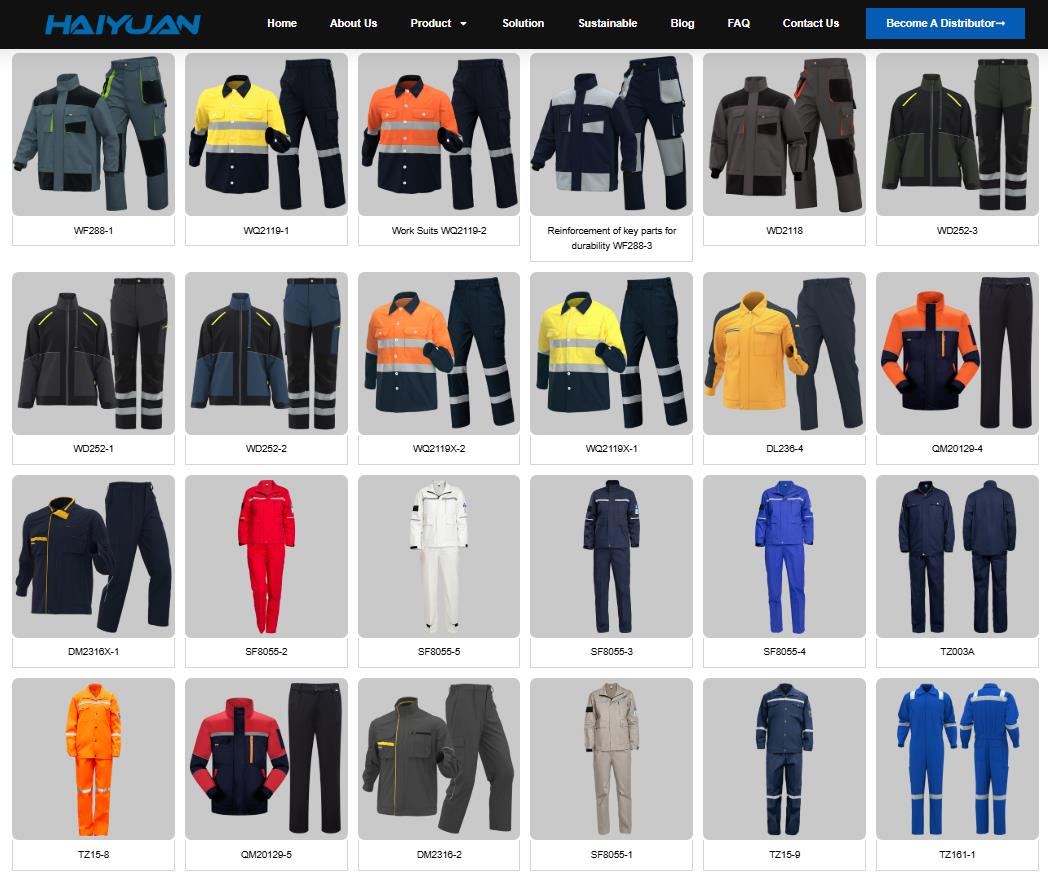

“Workwear” encompasses any clothing specifically designed and chosen for practicality, durability, and safety in a work environment. It’s defined by function over fashion, though the aesthetic has been widely adopted into mainstream style.
Here’s a detailed breakdown of what counts as workwear:
1. Core Principle: Garments Built for a Job
The true essence of workwear is clothing that serves as tools for labor. It prioritizes:
-
Durability: Withstands physical abuse, abrasion, and repeated washing.
-
Functionality: Features like reinforced knees, ample pockets (tool, cargo, ruler), hammer loops, and bibs.
-
Safety: Protects the wearer from job-specific hazards.
-
Comfort & Mobility: Allows for bending, lifting, and moving over long periods.
2. Traditional & Blue-Collar Workwear
This is the classic, iconic category, often rooted in specific trades:
-
Tops: Denim jackets, chore coats, coveralls, heavyweight flannel shirts, Hickory stripe shirts, durable henleys.
-
Bottoms: Denim jeans (especially in raw or selvedge forms), canvas pants, carpenter pants (with tool pockets and ruler pocket), bib overalls, utility shorts.
-
Full-body: Coveralls, boiler suits.
-
Materials: Heavy cotton duck canvas, denim, leather, tough twills.
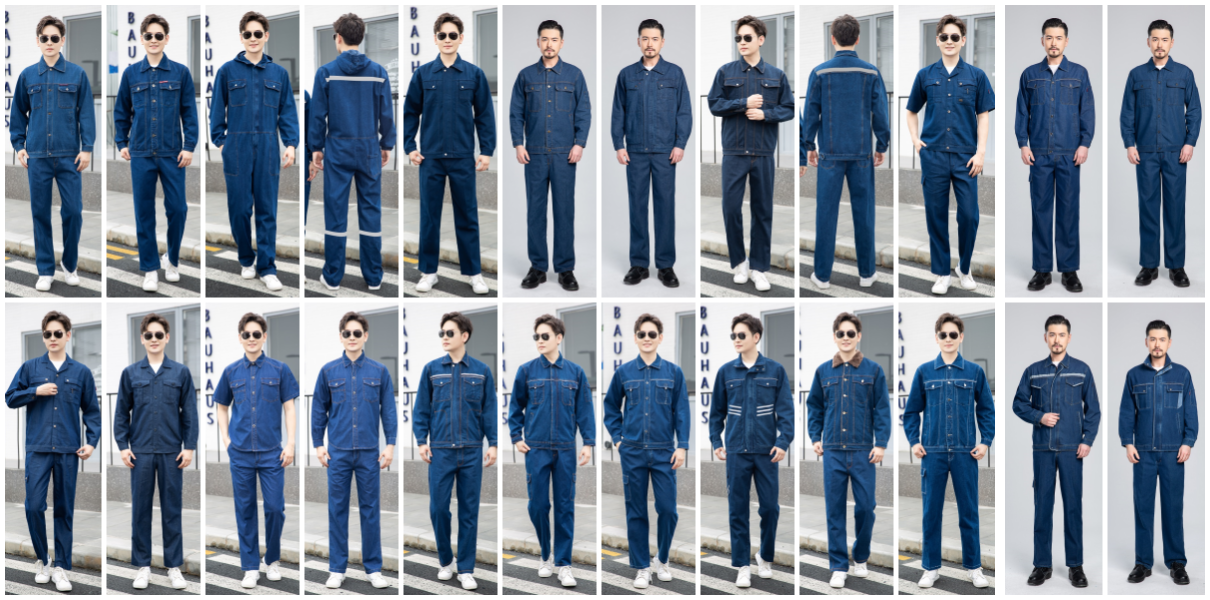
Denim Work Clothes Uniform
3. Modern & Regulated Occupational Workwear
This includes clothing mandated or optimized for specific, often industrial, jobs. It frequently involves PPE (Personal Protective Equipment).
-
High-Visibility (Hi-Vis) Clothing: Vests, jackets, and pants with fluorescent colors and reflective tape for road crews, warehouse workers, and first responders.
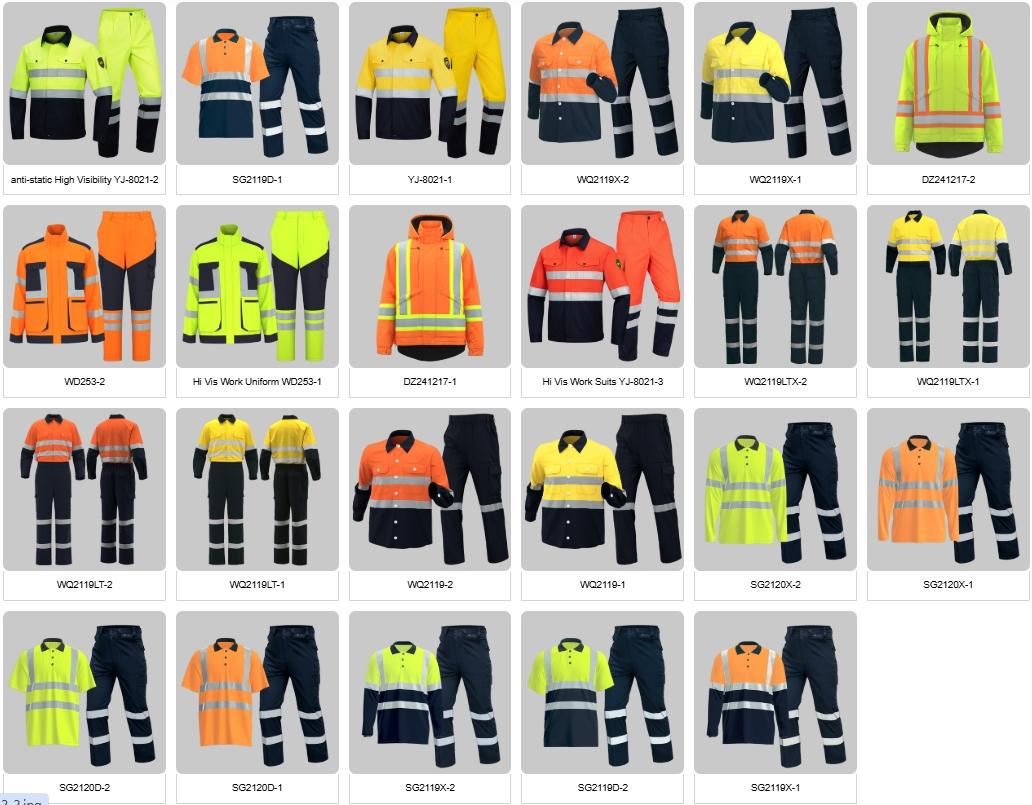
hi vis clothes -
Flame-Resistant (FR) Clothing: For electricians, welders, and oil & gas workers. Made from special treated fabrics like Nomex®.
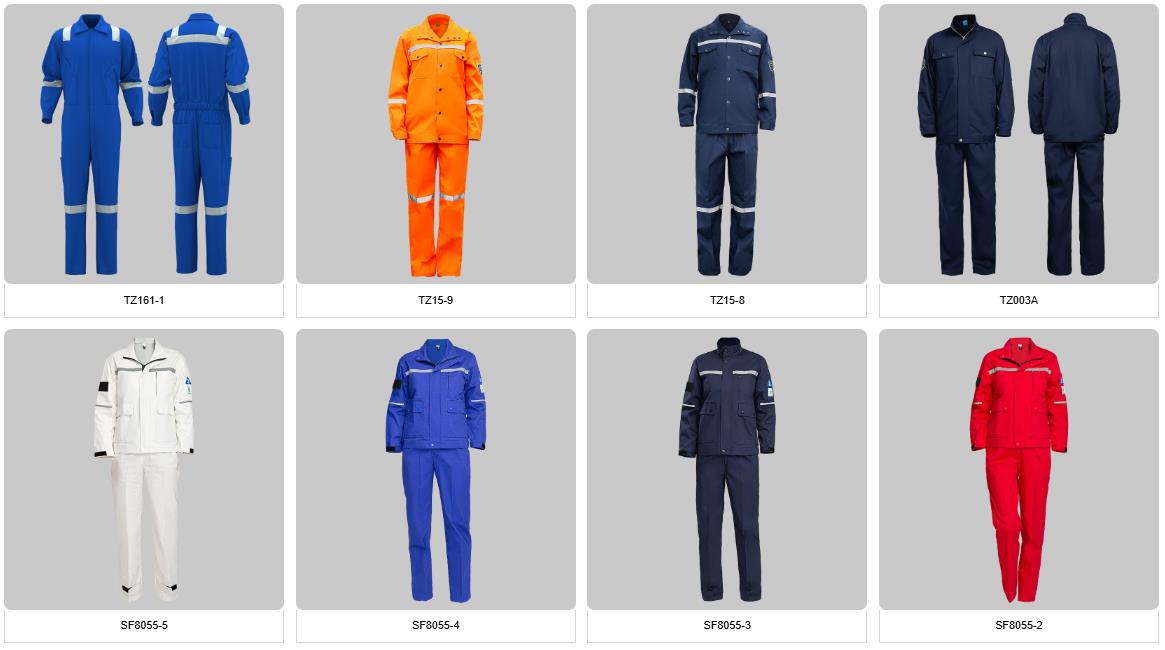
Flame-Resistant Uniform -
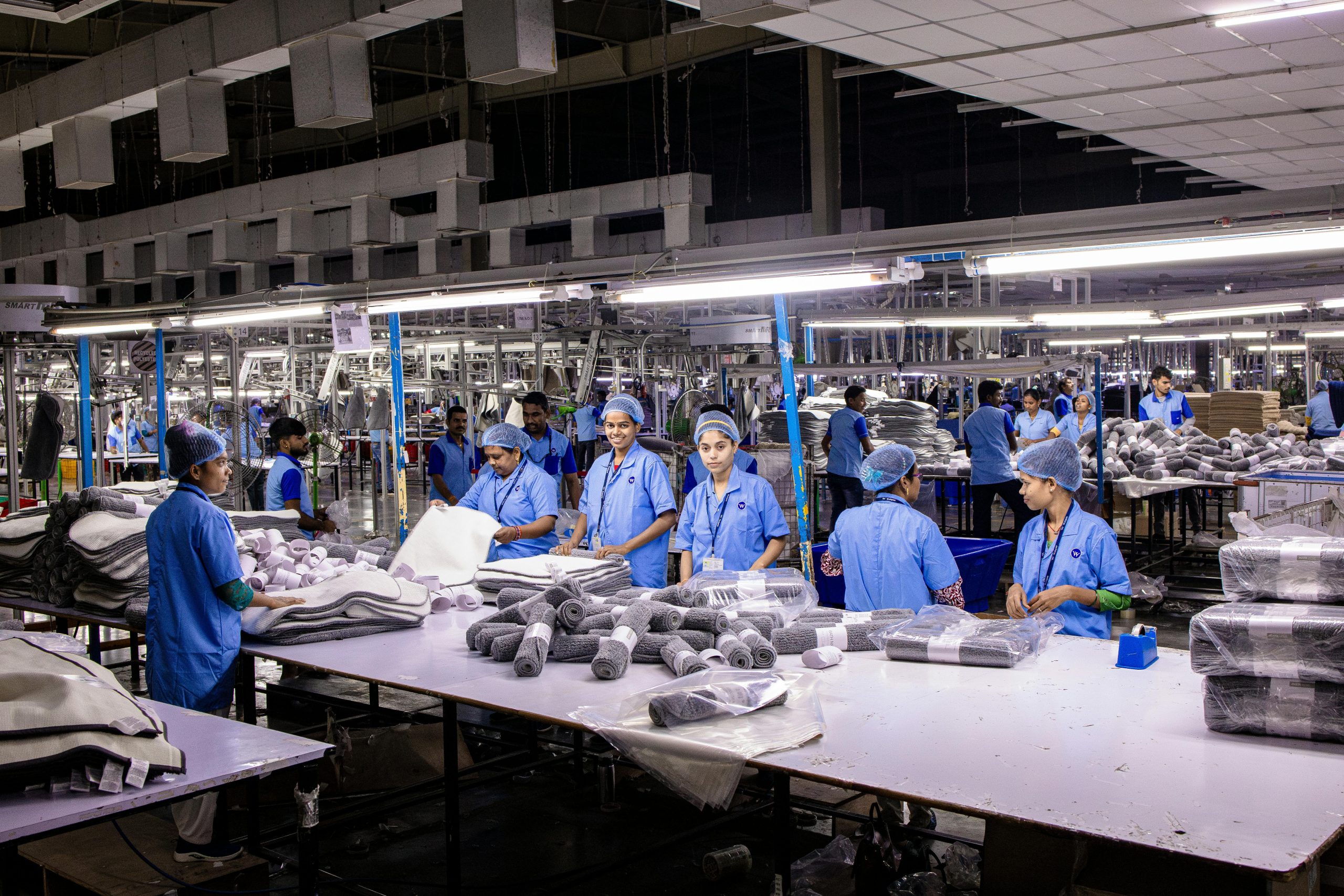
Uniforms: Often made from poly-cotton blends for easy care and durability, worn by mechanics, nurses, factory workers, and service staff.
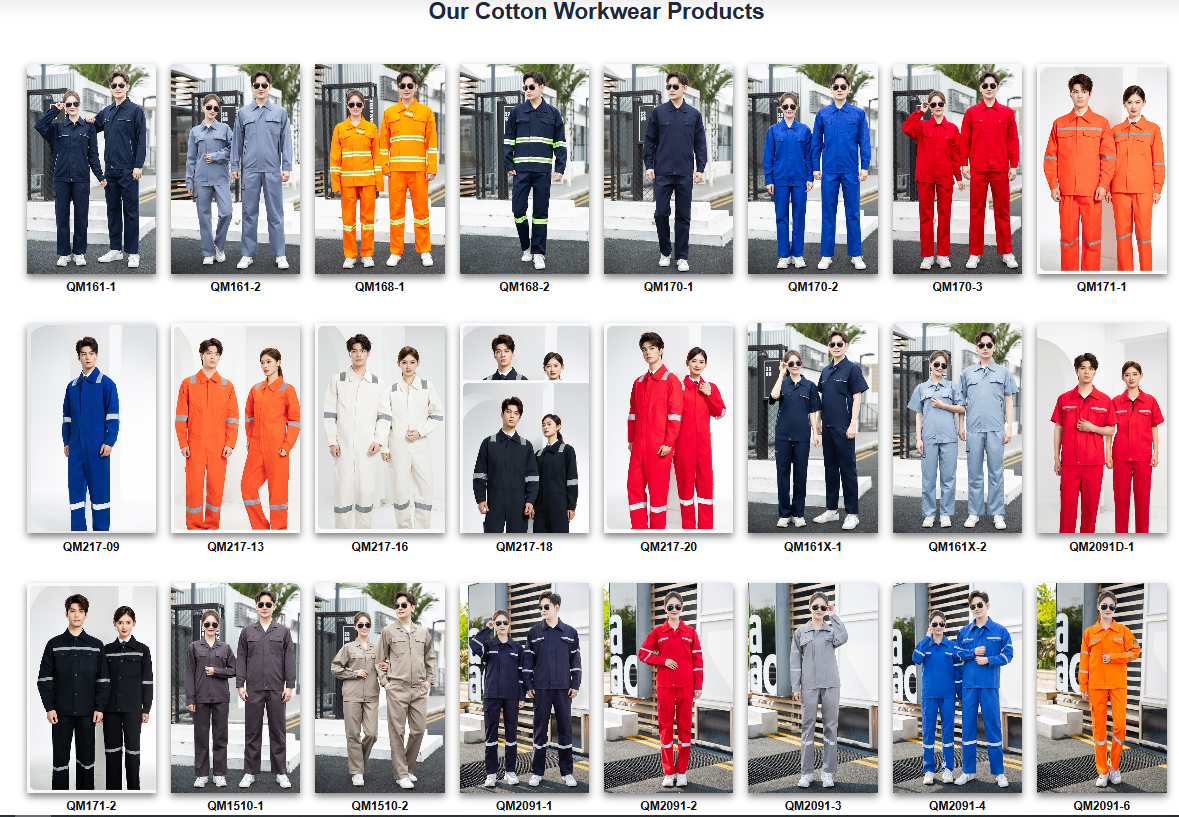
pure cotton workwear suit -
Tactical/Utility Wear: Designed for law enforcement, security, and military, featuring numerous compartments and durable synthetics like ripstop.
-
Specialized Gear: Welding leathers, chemical-resistant suits, cut-resistant sleeves, insulated clothing for cold storage.
4. Key Characteristics (The “DNA” of Workwear)
Even as a style, these elements signal workwear origins:
-
Reinforcements: Triple-stitched seams, bar tacks at stress points, rivets.
-
Robust Hardware: Metal buttons, shank buttons, heavy-duty zippers.
-
Utilitarian Details: Rule pockets, tool pockets, pen slots, cell phone pockets, hammer loops, oversized patch pockets, bib straps.
-
Natural, Rugged Fabrics: As discussed previously—canvas, denim, leather.
Denim Work Clothes Uniform
5. Workwear as a Fashion Style
In the last few decades, the aesthetic of blue-collar workwear has been adopted into mainstream fashion. This is sometimes called “Americana,” “heritage,” or “blue-collar chic.”
-
What counts: A chore coat worn as a stylish jacket, raw denim jeans worn for their fade, engineer boots as fashion footwear.
-
The key difference: While these items are authentic in design and material, they are often purchased for their look and cultural value rather than for literal manual labor. However, their quality means they could still perform the original function.
6. What is Generally NOT Considered Workwear
-
Business Attire: Suits, dress shirts, slacks, dress shoes (though these are “work wear” in an office, they fall under “businesswear” or “formalwear,” not the functional workwear category).
-
Fast Fashion or Delicate Garments: Items not built for durability or practical use.
-
Sportswear/Activewear: Designed for athletic performance, not labor protection (e.g., yoga pants, running shorts).
Quick Reference: Workwear Examples by Profession
| Profession | Typical Workwear Items |
|---|---|
| Carpenter | Bib overalls, carpenter jeans, tool belt, sturdy boots. |
| Auto Mechanic | Coveralls or shop shirt, steel-toe boots, possibly flame-resistant clothing. |
| Electrician | Arc-rated (AR) / Flame-Resistant (FR) shirt and pants, insulating gloves, safety glasses. |
| Construction Worker | Hi-Vis vest, durable jeans or work pants, hard hat, work boots, heavy-duty gloves. |
| Farmer/Rancher | Denim jeans, chore coat, wide-brimmed hat, durable boots. |
| Landscaper | Durable pants, work boots, wide-brimmed hat, gloves. |
In essence:
If a garment’s primary design intent is to protect the wearer and facilitate physical work, it’s workwear. This ranges from a historical denim jean to a modern arc-rated coverall. The term has also expanded to include the style inspired by these functional garments, creating a broad and influential category in both industry and fashion.