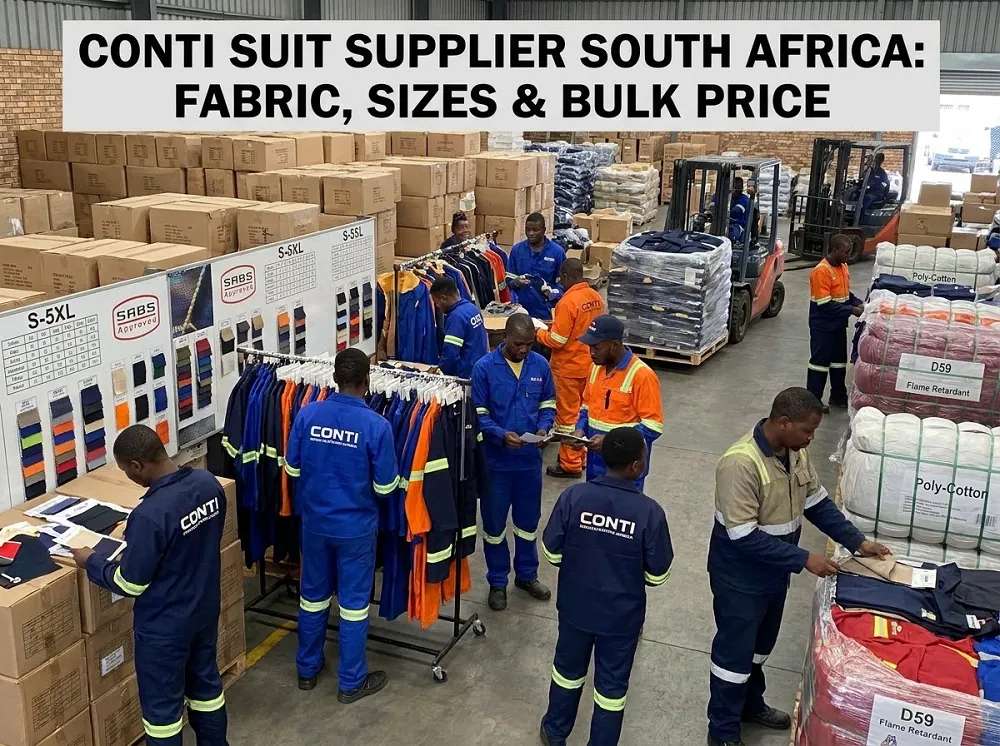
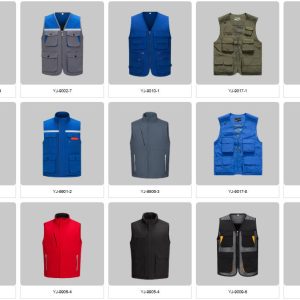
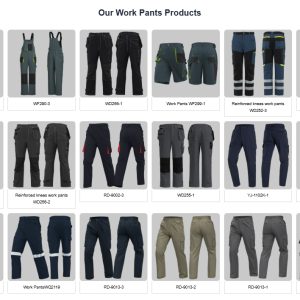
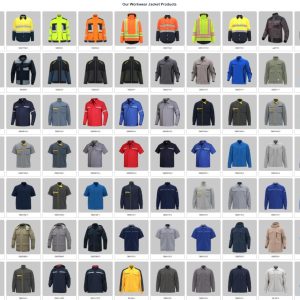
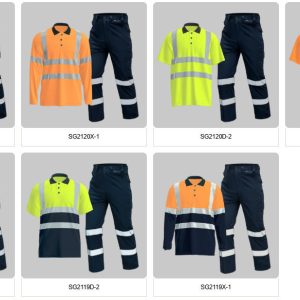
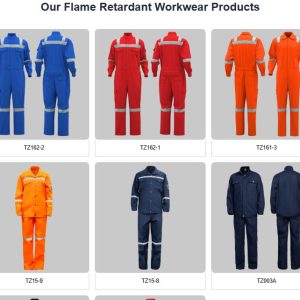
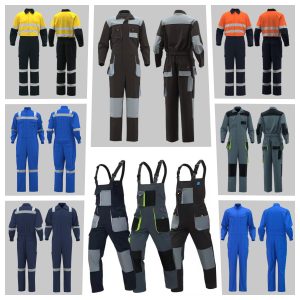
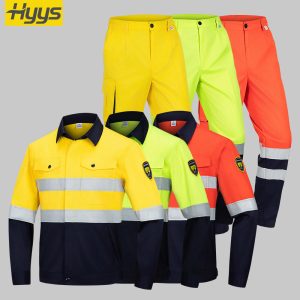
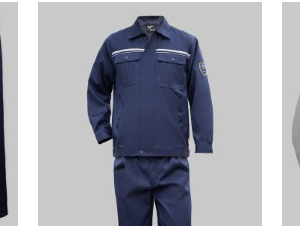
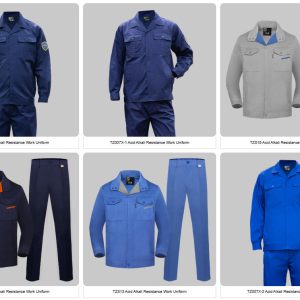
Promotional resellers live on three numbers: blank garment cost, decoration cost, and turnaround. For workwear the standard pattern is a blank poly-cotton or cotton-rich garment at US$3–12 per piece, one-colour screen printing or embroidery at US$0.20–2.50 per position, and a 10–15 working day turnaround for decorated orders. Stock the 10–15 blank lines your customers reorder, and buy everything else against confirmed orders.
Key takeaways
- Blank plus decoration plus freight is the pricing formula. Burying decoration inside the garment price destroys margin visibility.
- Decoratable is a fabric property, not a marketing word. Screen print behaves differently on mesh, stretch knit and coated fabric.
- Stock 10–15 blank lines covering vests, T-shirts, polos, sweatshirts, jackets and chef wear.
- Setup costs are the hidden profit leak on small custom orders, so quote them as separate lines.
- Size range beats price depth for repeat business: customers reorder when their sizes exist.
1. Who promotional resellers are, and what they sell
Promotional resellers sit between a blank garment supplier and the end customer. Their customers are usually companies buying branded clothing for staff, events, giveaways or retail resale: construction firms, hotels, restaurants, gyms, schools, event organisers, charities and marketing agencies.
Their range is broader than a workwear specialist’s but shallower in technical content, and they need four things from a supplier.
| Requirement | Why it matters to a reseller |
|---|---|
| Wide size availability | Customers reorder in ones and twos, and out-of-stock sizes stall the order |
| Consistent colour between orders | Repeat branding work must match the previous batch |
| Decoration-friendly surfaces | Print and embroidery quality depends on the fabric |
| Short, predictable lead times | Customers buy for dated events |
This is why a promotional reseller should buy from a supplier that treats blank garments as a stocked, repeatable catalogue rather than a made-to-order project.
2. What “decoratable” actually means
A garment is decoratable when its fabric, surface and construction allow the decoration method to be applied reliably. The same shirt can be excellent for embroidery and poor for screen printing.
| Fabric or feature | Screen print | Embroidery | Heat transfer | Notes |
|---|---|---|---|---|
| 100% cotton jersey | Excellent | Excellent | Good | The most forgiving surface |
| Cotton-rich poly-cotton | Very good | Very good | Good | Standard workwear fabric |
| Polyester performance knit | Poor to fair | Fair | Excellent | Print can bleed or fade |
| Mesh, for example a hi-vis vest | Fair | Not suitable | Good | Mesh cannot hold embroidery well |
| Coated or waterproof fabric | Poor | Not suitable | Fair | Requires specialist transfer films |
| Stretch or elastane blend | Fair | Good | Good | Print can crack when stretched |
| Pique polo knit | Good | Excellent | Good | The classic promotional polo |
The practical rule: cotton or cotton-rich for print, pique knit for embroidery, and polyester performance fabric only when heat transfer is the chosen method.
3. What to stock and what to order on demand
| Product line | Stock or order | Typical blank cost | Common decoration |
|---|---|---|---|
| Hi-vis vest | Stock | $2.50–5.00 | Heat transfer, reflective print |
| Cotton T-shirt | Stock | $3.00–6.50 | Screen print, pocket embroidery |
| Pique polo | Stock | $4.50–9.00 | Embroidery, back print |
| Sweatshirt or hoodie | Stock | $7.00–14.00 | Embroidery, print |
| Lightweight work jacket | Stock core sizes | $10.00–18.00 | Embroidery, print |
| Insulated jacket | Seasonal order | $18.00–34.00 | Embroidery |
| Chef jacket and trousers | Order on demand | $9.00–20.00 | Embroidery |
| Certified FR or hi-vis | Order on demand | $6.00–45.00 | Print inside compliant areas only |
A practical starter inventory is 10–15 lines and 300–500 pieces, weighted towards T-shirts, polos and vests in the four or five sizes that sell most.
4. The pricing formula that keeps you profitable
| Line | 24 T-shirts | 250 T-shirts |
|---|---|---|
| Blank garment at $4.20 | $100.80 | $1,050.00 |
| Screen setup, one colour | $25.00 | $25.00 |
| Printing at $0.45 per position | $10.80 | $112.50 |
| Freight to customer | $18.00 | $45.00 |
| Subtotal | $154.60 | $1,232.50 |
| Margin at 35% | $83.00 | $663.00 |
| Quoted price | $237.60 | $1,895.50 |
| Price per unit | $9.90 | $7.58 |
The 250-piece order is 23% cheaper per unit without sacrificing margin percentage, because setup and freight spread across more pieces.
5. Decoration methods compared
| Method | Setup cost | Cost per position | Best for | Durability |
|---|---|---|---|---|
| Screen print | $20–80 per colour | $0.20–1.00 | Large one to three-colour logos on cotton | Good, can crack on stretch fabric |
| Embroidery | $20–60 digitising | $0.70–2.50 | Chest logos, polos, jackets, caps | Excellent |
| Heat transfer or vinyl | $0–30 | $0.15–0.80 | Small detailed multi-colour logos | Good, depends on film quality |
| Direct-to-film | $0–20 | $0.60–1.80 | Full-colour designs on polyester | Good on performance fabric |
| Sublimation | $0–20 | $0.80–2.00 | All-over prints on light polyester | Excellent, no hand feel |
| Woven badge | $40–120 | $0.40–1.20 | Uniforms needing a premium look | Excellent |
6. Blank garment specification for resellers
| Specification | Why it matters | Recommended value |
|---|---|---|
| Fabric weight | Print coverage and perceived quality | 160–200 g/m² T-shirts, 220–260 g/m² polos |
| Composition | Decoration performance | 100% cotton or cotton-rich blend |
| Colour fastness | Repeat orders must match | Grade 4 or better |
| Shrinkage | Fit after washing | 3% maximum poly-cotton, 5% cotton |
| Size range | Order coverage | S–3XL stocked, 4XL on request |
| Neck and shoulder tape | Print and embroidery stability | Taped neck and shoulders |
7. Colour consistency and repeat orders
| Approach | Cost | Consistency | When to use |
|---|---|---|---|
| Stock colours from the range | Lowest | Good within a dye lot | General promotional work |
| Stock colour with a retained sample | Low | Good when compared against the sample | Repeat branded orders |
| Pantone-matched custom dye | High, plus 300–1,000 piece minimum | Best | Large corporate programmes |
Keep a physical retained sample of every colour you sell, dated and signed, and compare new deliveries against it before dispatch.
8. Minimum order quantities and price breaks
| Quantity band | Typical price effect | Notes |
|---|---|---|
| 10–50 pieces | +15–30% versus 250 pieces | Setup cost dominates |
| 50–100 pieces | +8–15% | A common promotional order size |
| 100–500 pieces | Base | The sweet spot for mixed-size orders |
| 500–1,000 pieces | −5 to −10% | Colour and size range can widen |
| 1,000–3,000 pieces | −8 to −15% | Custom dyeing becomes practical |
Our standard garment minimum is 100 pieces per style and colour, with 50 pieces available on selected stock items.
9. Lead times: what to promise and what to avoid
| Scenario | Realistic lead time | Risk |
|---|---|---|
| Stock blank, existing decoration | 5–10 working days | Low |
| Stock blank, new logo and artwork | 10–15 working days | Medium: artwork approval slips |
| Order-in blank, stock fabric | 20–35 days plus decoration | Medium |
| Order-in blank, custom colour | 35–60 days plus decoration | High |
| Peak season, September to November | Add 5–10 days | High |
Never promise a dated event delivery without signed artwork approval and a confirmed blank stock position.
10. Quality control for decorated garments
| Defect | Cause | Prevention |
|---|---|---|
| Print cracking after washing | Under-cured ink or stretch fabric | Correct curing temperature, right ink for the fabric |
| Print bleeding on polyester | Printing without a bleed-blocking base | Dye-migration blocker or heat transfer |
| Embroidery puckering | Insufficient backing or poor hooping | Appropriate stabiliser, test on a sample |
| Colour mismatch between batches | Different dye lots | Retain a physical sample and compare |
| Logo position drift | No approved placement template | Artwork with measured placement |
Run a decorated sample through three washes before every new fabric and ink combination.
11. What to specify on a purchase order
| Item | Specification to write |
|---|---|
| Fabric and weight | Composition and GSM |
| Colour | Range colour plus retained sample reference |
| Size breakdown | Exact quantities per size |
| Decoration | Method, position, size, colours |
| Packing | Polybag, hang tag, size sticker |
| Labelling | Care and content information |
| Delivery | Date, address, split shipments |
12. Common mistakes promotional resellers make
- Quoting an all-in price and forgetting setup, so small orders run at a loss.
- Stocking too many colours, which destroys working capital.
- Promising embroidery on mesh or coated garments, where the decoration fails.
- Skipping the retained colour sample, so repeat orders arrive in a different shade.
- Buying from a supplier with no size availability, so customers cannot reorder.
- Ignoring care labelling for retail and marketplace channels.
13. Frequently asked questions
What are blank garments in promotional work?
Undecorated clothing such as T-shirts, polos, vests, sweatshirts and jackets bought in bulk and then printed or embroidered with the customer’s branding.
What is the minimum order for blank workwear?
Our standard minimum is 100 pieces per style and colour, with 50 pieces accepted on selected stock items.
Which blank garments are best for screen printing?
100% cotton or cotton-rich blends. Polyester performance fabrics need dye-migration blockers or heat transfer, because the ink can bleed.
Which blanks are best for embroidery?
Pique polos, sweatshirts, jackets and caps. Avoid mesh and coated fabrics, which cannot hold embroidery cleanly.
How much should I charge for decoration?
One-colour screen printing typically costs US$0.20–1.00 per position plus a US$20–80 setup per colour, and embroidery US$0.70–2.50 per position plus a US$20–60 digitising fee. Quote setup separately.
How do I keep colours consistent between orders?
Keep a dated physical retained sample of every colour and compare each new delivery against it. Pantone custom dyeing is for high-volume corporate accounts, with a 300–1,000 piece minimum.
What lead time should I promise?
Five to ten working days for stock blanks with an existing logo, and ten to fifteen working days when artwork is new. Order-in blanks add 20–35 days, and peak season adds another 5–10 days.
Can you supply certified hi-vis and FR garments for promotional orders?
Yes. Branding must stay inside compliant areas and must not cover reflective tape or reduce the visible fluorescent surface.
Source blanks and decoration-ready workwear for your promotional business: request a quotation · wholesale work clothes · custom workwear manufacturing