
Workwear is categorized primarily by its function, industry, and the specific hazards or dress codes of a job. Here’s a detailed breakdown of the major types:
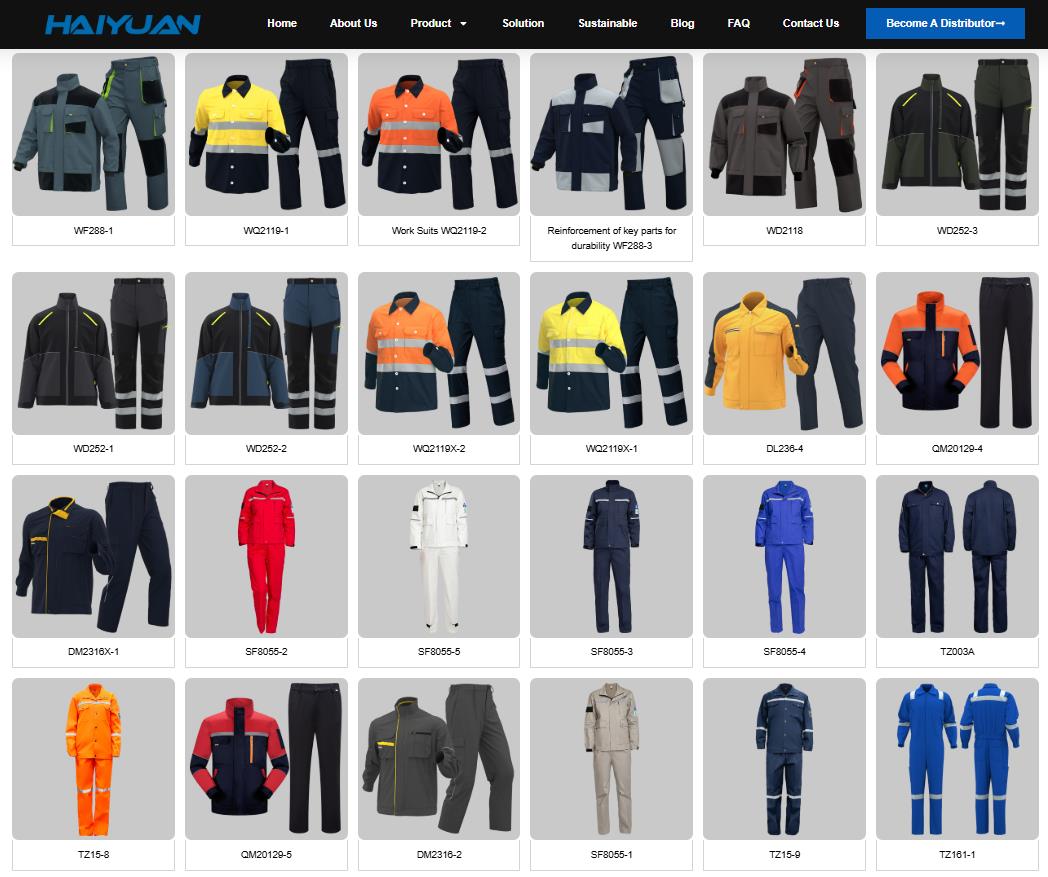
1. Durable / Rugged Workwear
Designed for trades and manual labor, built to withstand abrasion, dirt, and repeated wear.
-
Key Items: Duck canvas jackets, denim or canvas work pants, coveralls, heavyweight flannel shirts.
-
Materials: Duck canvas, denim, ripstop cotton, tough synthetics.
-
For: Construction, carpentry, manufacturing, automotive, farming.
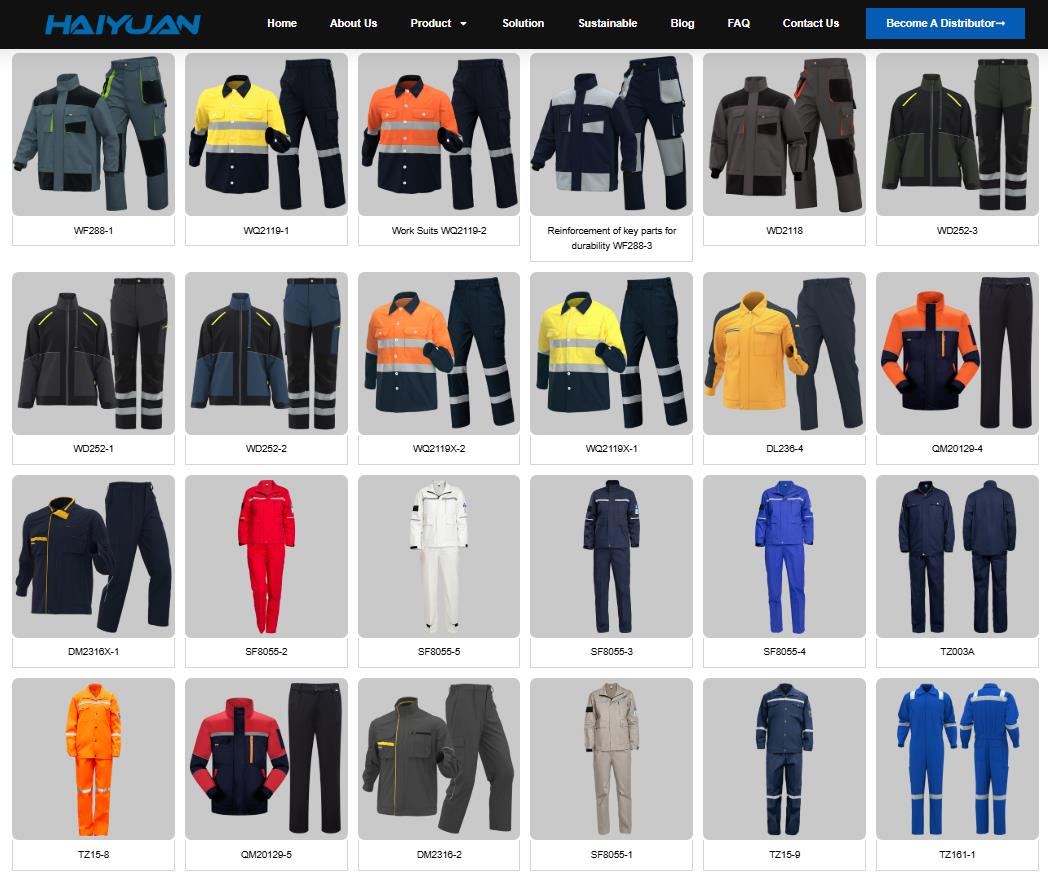
work uniform
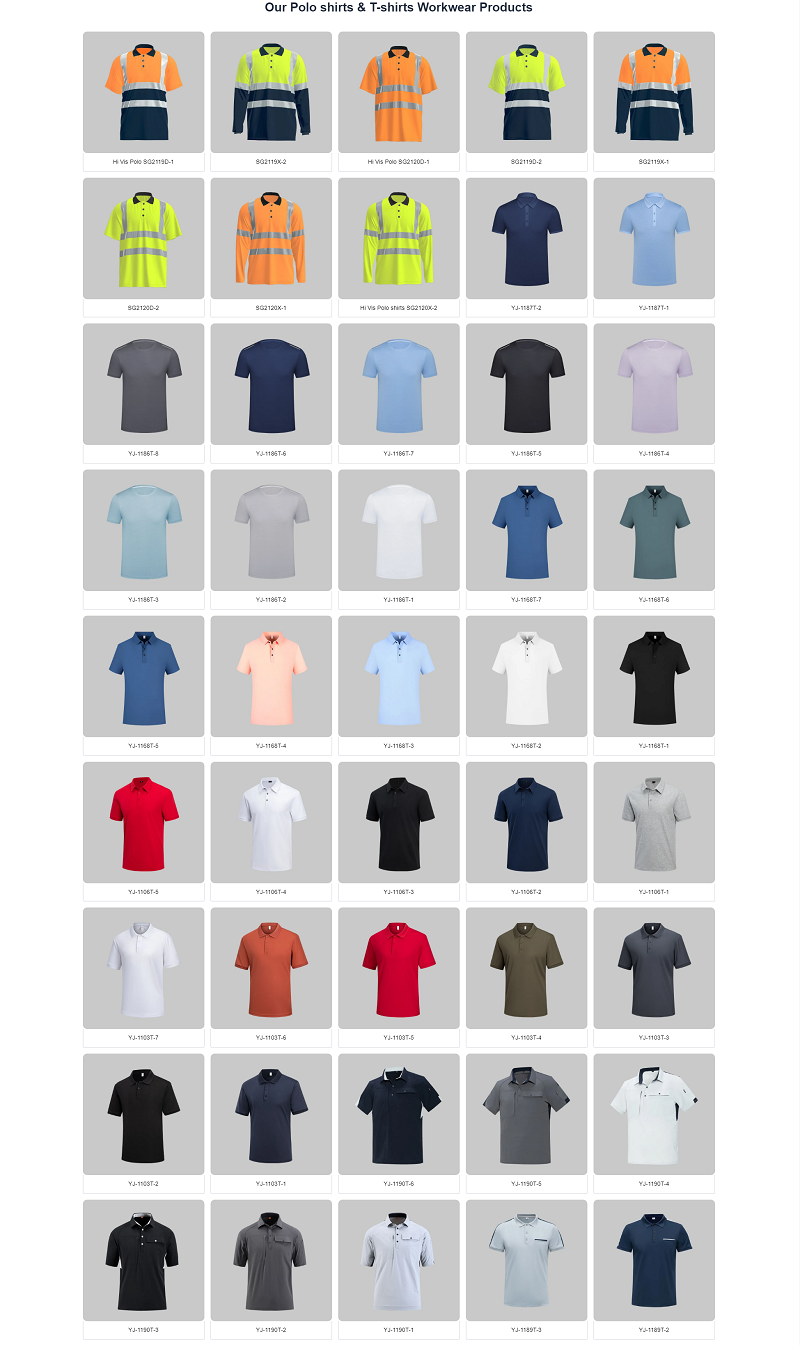
2. High-Visibility (Hi-Vis) Apparel
Critical for safety in low-light or high-traffic areas. Features fluorescent colors (orange, yellow, lime) and retro-reflective tape.
-
Standards: Complies with ANSI/ISEA (US) or EN ISO (Europe) classes for visibility.
-
For: Road crews, utility workers, warehouse forklift operators, airport ground staff, first responders.
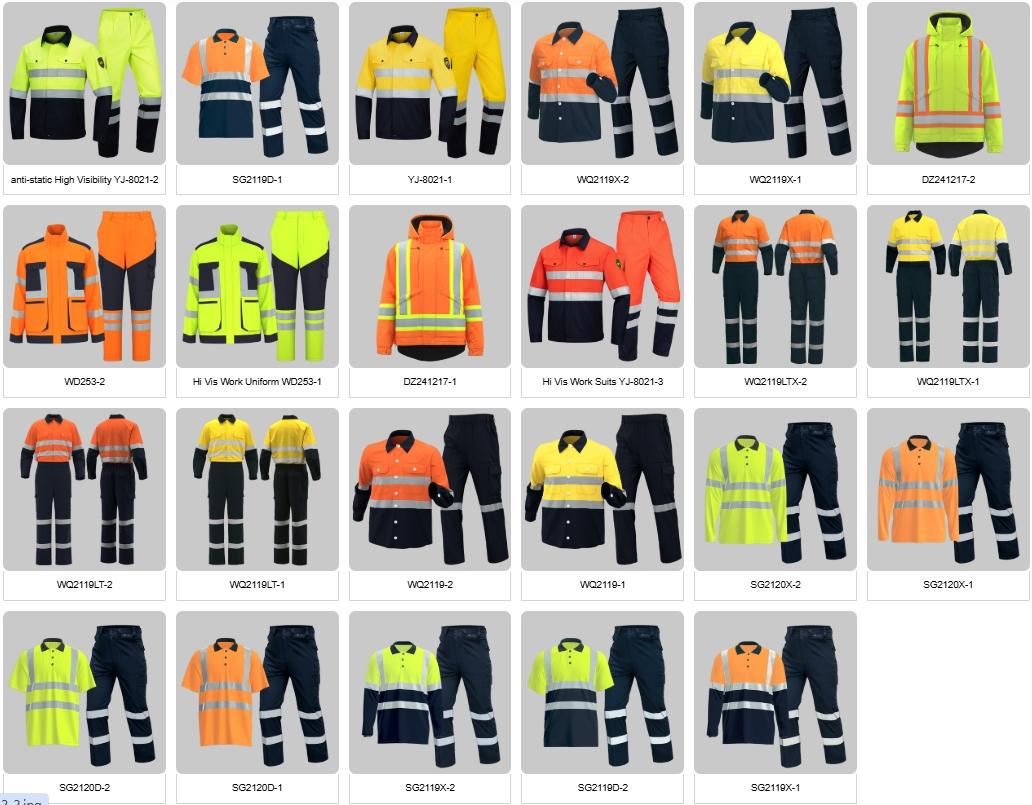
hi vis clothes
3. Flame-Resistant (FR) Apparel
Made from specially treated fabrics or inherent fibers (like Nomex, Kevlar, HengLu® , modacrylic) that self-extinguish to protect against arc flashes, flash fires, and molten metal splatter.
-
Key Items: Coveralls, shirts, pants, jackets, and hoods.
-
Standards: NFPA 70E (electrical arcs), NFPA 2112 (flash fires).
-
For: Oil & gas, electric utilities, welding, chemical processing.

flame-retardant-work-uniform
4. Corporate / Office Workwear
Encompasses professional attire, from formal business to business-casual.
-
Key Items: Suits, blazers, dress pants, skirts, dress shirts, blouses, polished footwear.
-
Materials: Wool, cotton, polyester blends, with a focus on style and professional presentation.
-
For: Finance, law, corporate offices, sales, client-facing roles.
5. Technical / Performance Workwear
Focuses on comfort, mobility, and climate management for active professionals. Often blends professional looks with athletic functionality.
-
Key Items: Stretch chinos, moisture-wicking polo shirts, insulated vests, travel blazers.
-
Materials: Technical fabrics with stretch, breathability, wrinkle-resistance, and water repellency.
-
For: Tech employees, consultants, engineers, field managers—anyone needing to move comfortably while looking professional.
6. Uniforms & Service Apparel
Identifies employees, promotes brand image, and is designed for the specific tasks of a service role.
-
Corporate Uniforms: Polished shirts/polos with company logos for retail, airlines, hospitality.
-
Service & Maintenance: Often durable polyester uniforms for security, janitorial, or facility maintenance staff.
-
For: Retail, hospitality, airlines, security, public transport.
7. Outdoor & All-Weather Gear
Protects against harsh environmental conditions like rain, wind, and cold.
-
Key Items: Insulated parkas, waterproof rain suits, softshell jackets, thermal base layers, wide-brim hats.
-
Features: Waterproof/breathable membranes, insulation (down or synthetic), taped seams.
-
For: Landscaping, forestry, maritime work, fishing, construction in inclement weather.
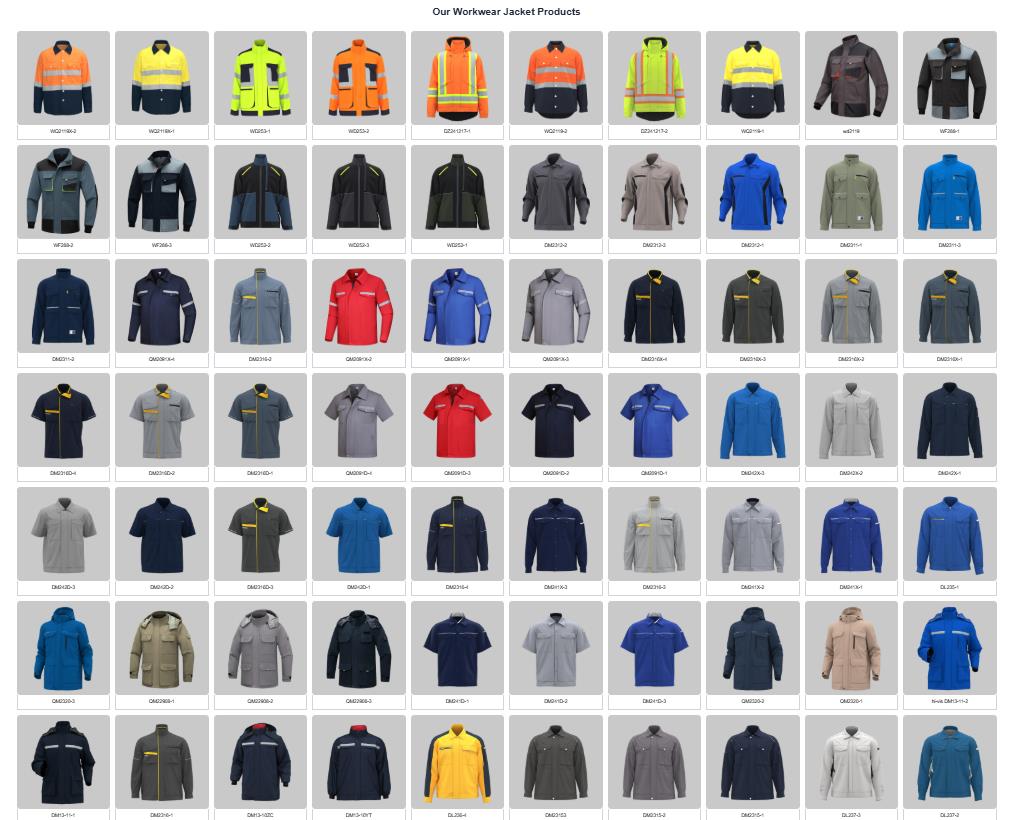
work jackets
8. Specialized Industry Apparel
Tailored to the unique needs of specific professions.
-
Healthcare Scrubs: Lightweight, fluid-resistant, antimicrobial fabrics. Often in specific colors/departments.
-
Culinary & Hospitality: Chef coats (double-breasted for heat protection), checkered pants, aprons. Made from cotton or blends for breathability.
-
Tactical / Law Enforcement: Durable, functional uniforms with pockets for gear, often in specific colors (e.g., navy, tactical grey). Made by brands like 5.11, Blauer.
9. Workwear Accessories & PPE (Personal Protective Equipment)
-
Footwear: Steel-toe or composite-toe boots, puncture-resistant soles, electrical hazard (EH) rating, waterproofing.
-
Head Protection: Hard hats, bump caps.
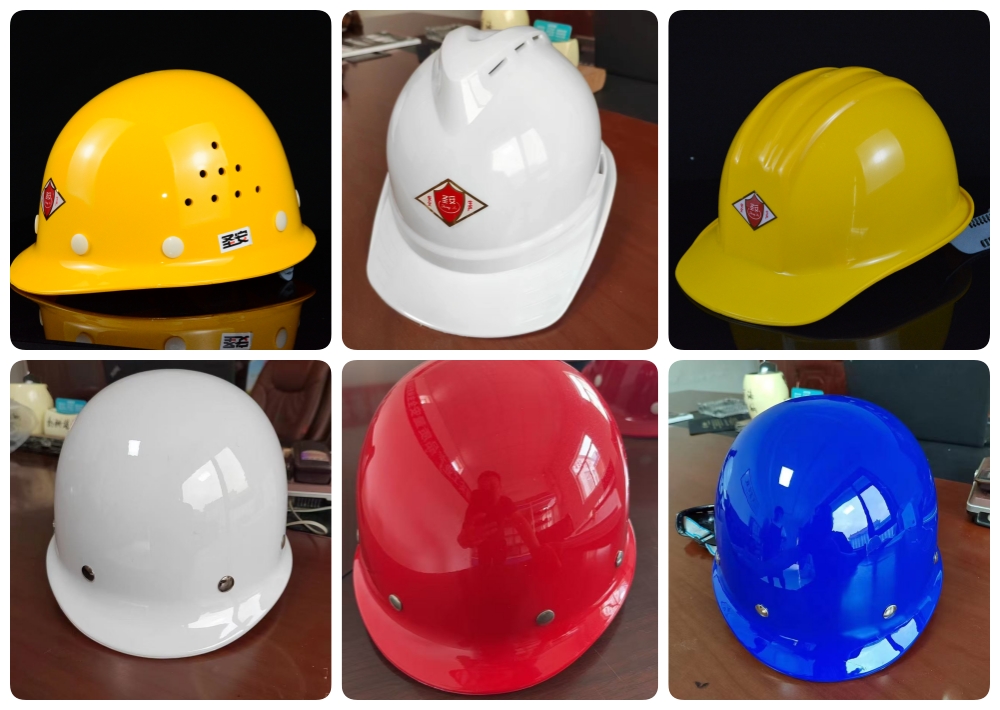
the hard hat -
Hand Protection: Work gloves (cut-resistant, impact, leather, insulated).
-
Hearing/Eye Protection: Safety glasses, goggles, earplugs, earmuffs.
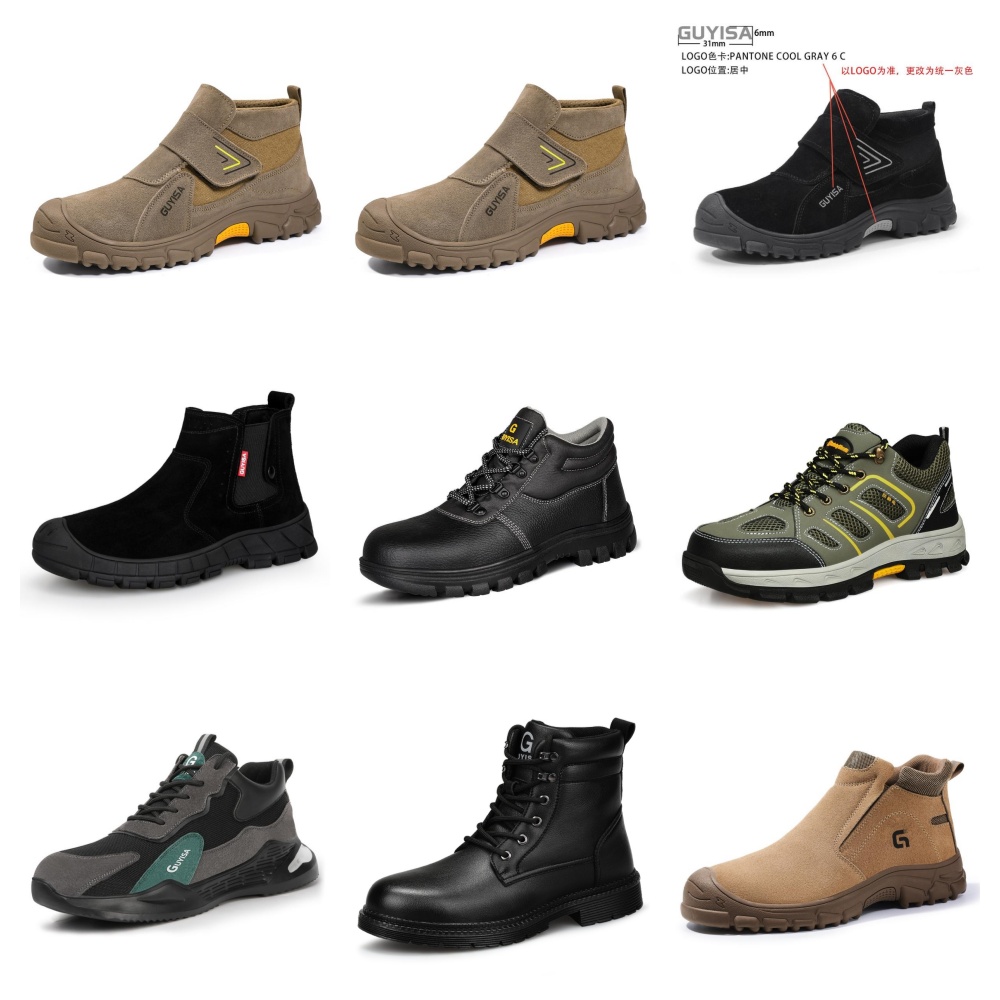
safety footwear
Choosing the Right Type: Key Factors
-
Job Hazards: Identify risks (impact, fire, chemicals, visibility).
-
Climate & Environment: Consider temperature, weather, and indoor/outdoor work.
-
Mobility & Comfort: Needed range of motion and duration of wear.
-
Company Policy & Image: Dress codes, branding, and uniform requirements.
-
Industry Regulations: Ensure compliance with OSHA, NFPA, or other standards.
In essence, modern workwear is less about a single “uniform” and more about selecting a system of clothing and PPE that provides safety, functionality, and comfort for the specific demands of the job.