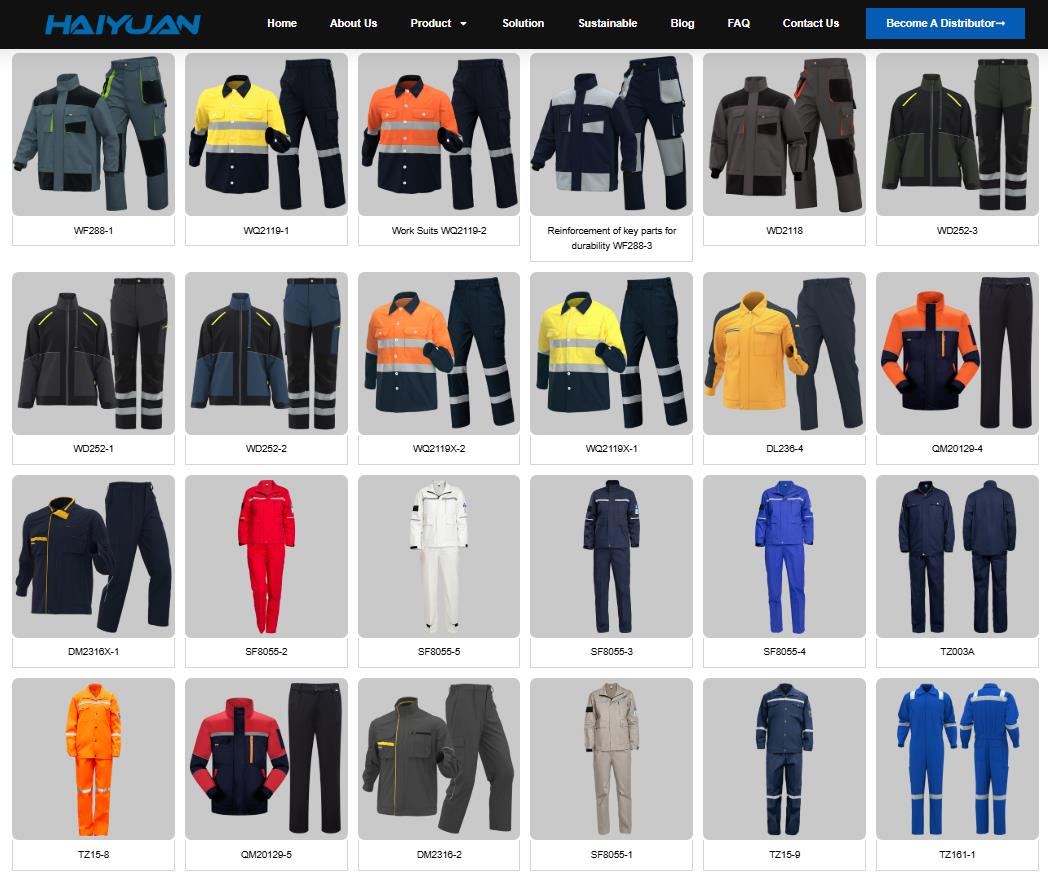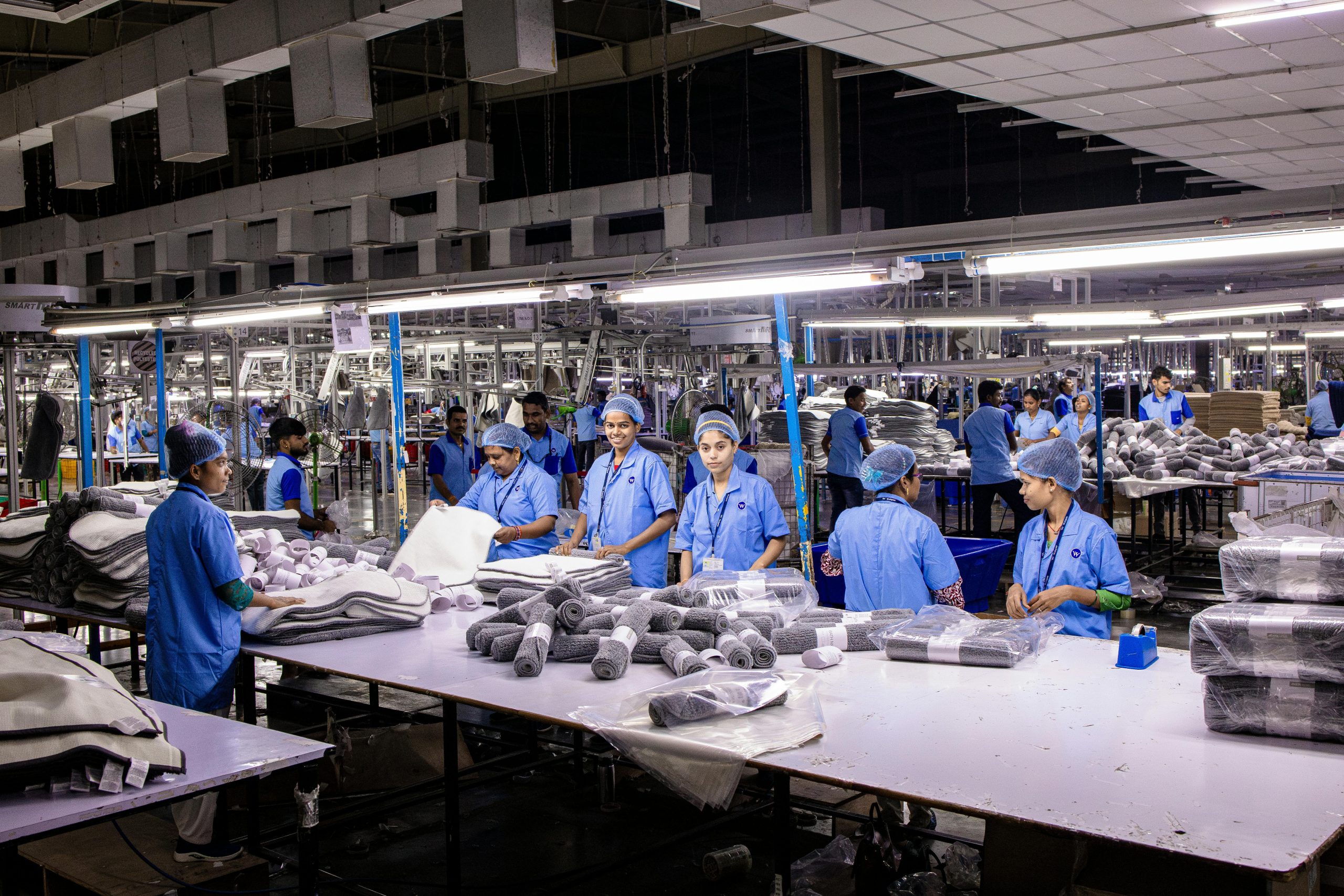

Workwear encompasses a wide range of clothing designed for functionality, safety, and identification in the workplace. The types can be categorized by their primary purpose and industry. Here’s a detailed breakdown:
1. Protective & Safety Workwear
This is the most critical category, designed to protect workers from specific hazards.
-
High-Visibility (Hi-Vis) Clothing: Vests, jackets, and pants made with fluorescent materials and reflective tape for visibility in low-light conditions (e.g., road construction, logistics).
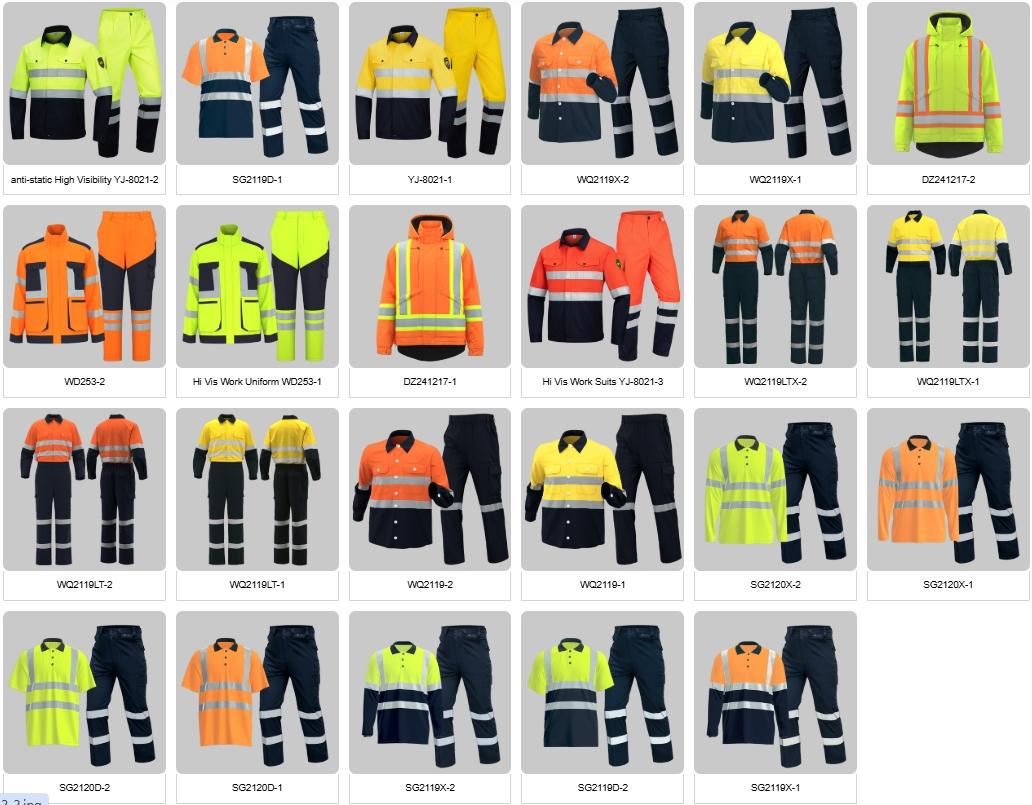
hi vis clothes -
Flame-Resistant (FR) Clothing: Made from special fabrics that self-extinguish, protecting against flash fires, electric arcs, and molten metal (e.g., oil & gas, electrical utilities, welding).
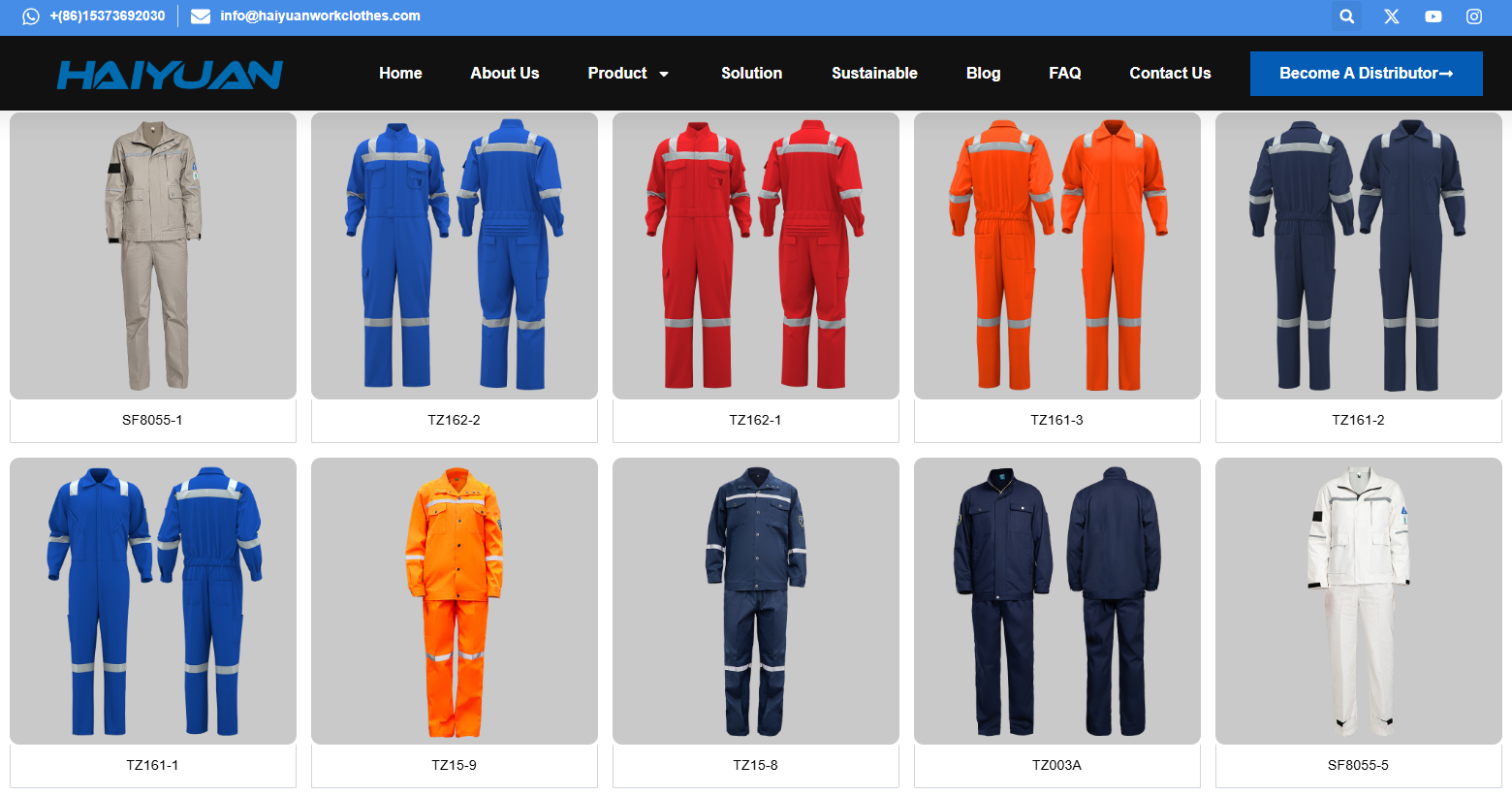
flame-retardant-work-uniform -
Chemical-Resistant Clothing: Includes aprons, coveralls, and suits (like HengLu®) that protect against hazardous liquids and particles.
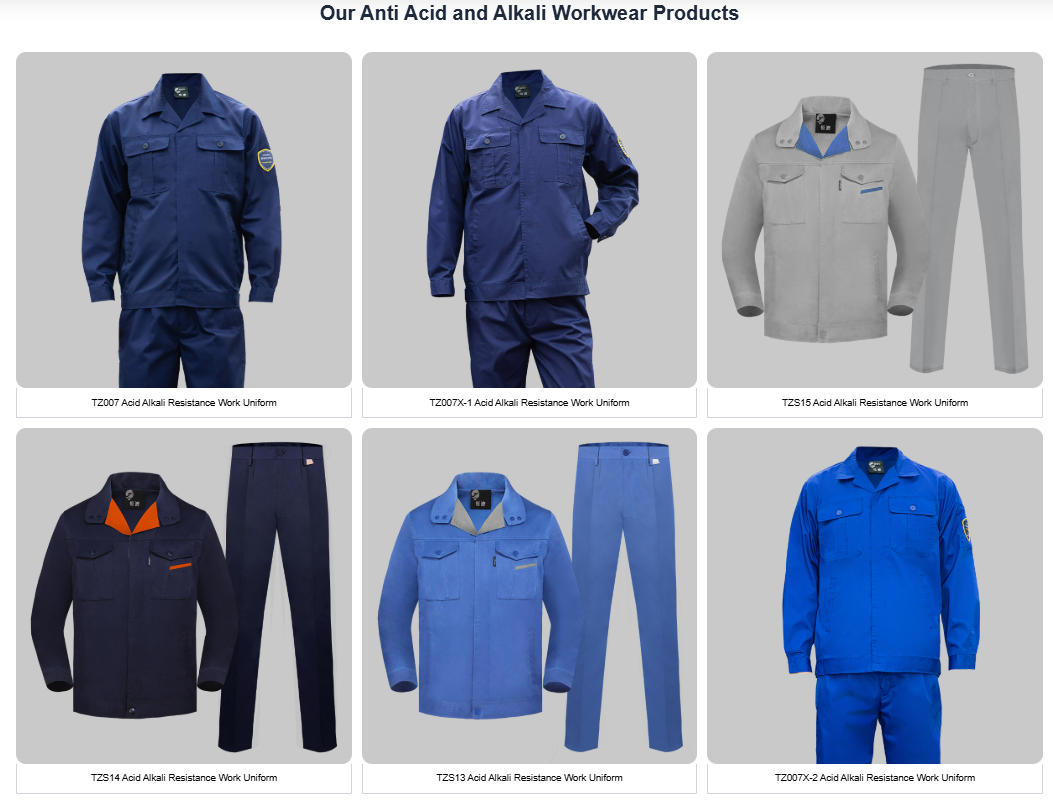
acid alkali resistance work uniform -
Cut/Abrasion-Resistant Clothing: Gloves, sleeves, and pants made with high-strength fibers (e.g., Kevlar, Dyneema) for industries like metalworking, glass handling, and construction.
-
Weather-Resistant & Insulated Clothing: Heavy-duty jackets, parkas, rainwear, and insulated bibs for outdoor work in extreme cold, wind, or rain.
-
Arc-Rated Clothing: Specifically tested and rated to protect against the thermal effects of an electric arc.
2. Industrial & Trade Workwear
Durable, functional clothing designed for manual labor and skilled trades, often featuring utility pockets and rugged fabrics.
-
Coveralls & Overalls: Full-body garments that protect personal clothes and offer freedom of movement for mechanics, farmers, and painters.
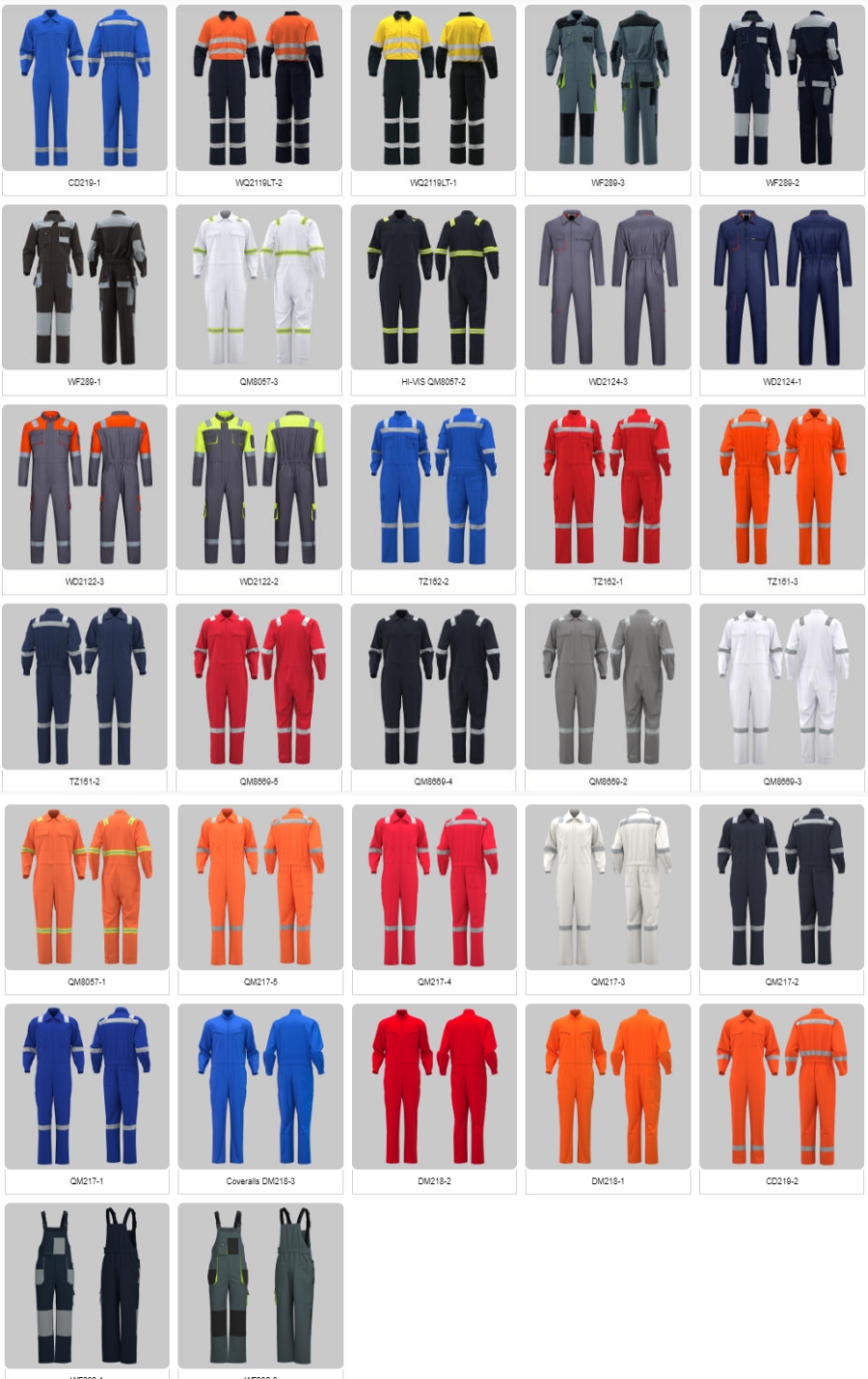
coveralls overalls uniform -
Work Pants & Jeans: Reinforced with double-stitching, often made from canvas or heavy-duty denim, with tool pockets and knee pad insert pockets.
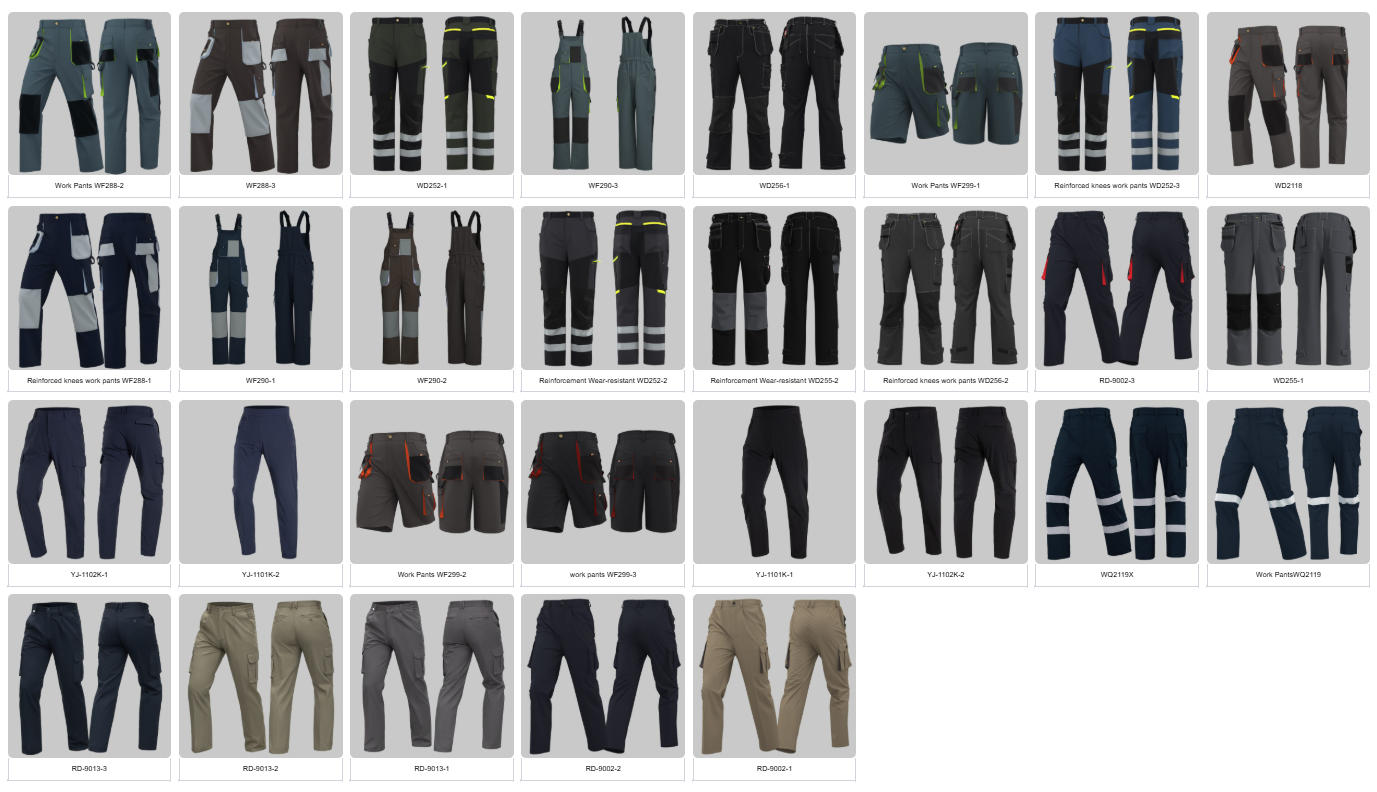
Industrial Work pants -
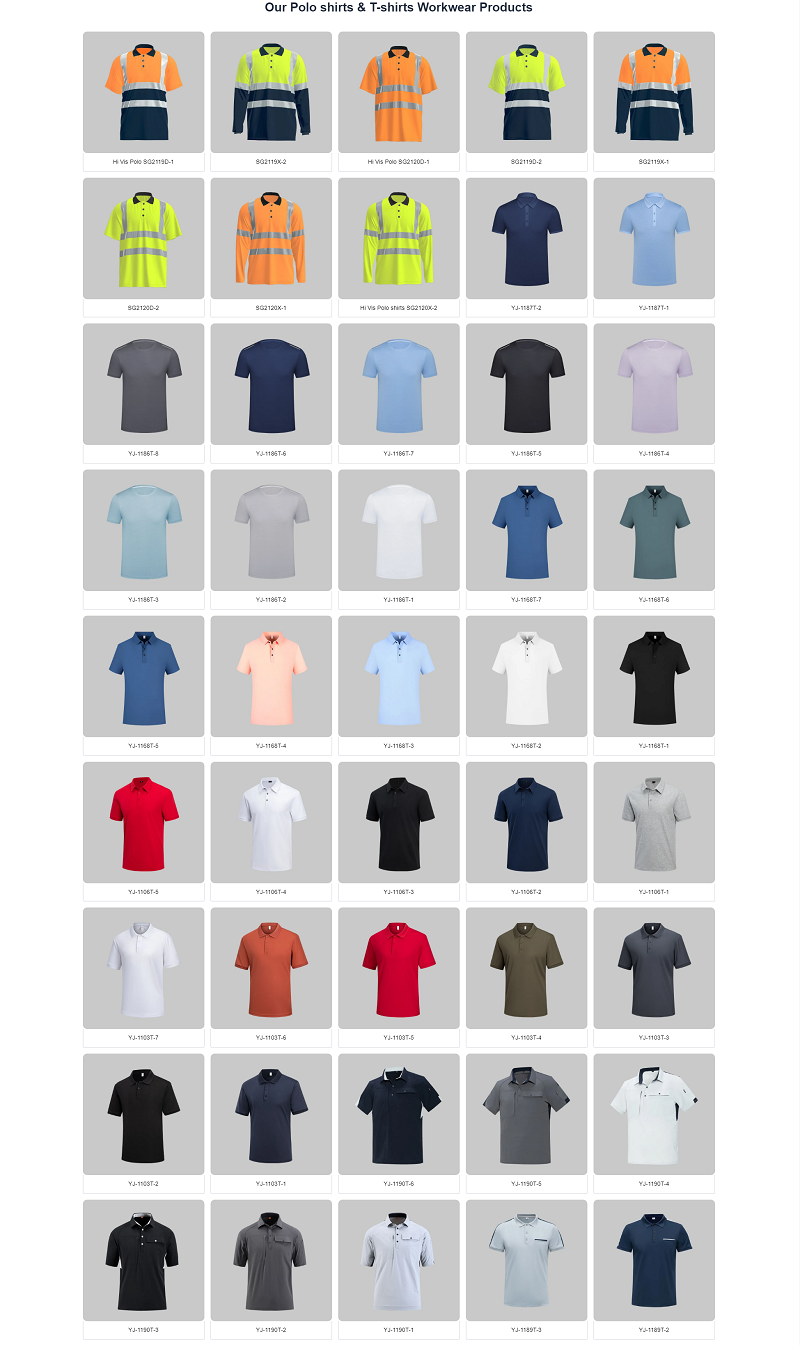
Work Shirts: Typically long or short-sleeved button-ups made from tough cotton or blends, often with company logos.
-
Shop Coats & Lab Coats: Lighter coats used in garages, workshops, or laboratories to protect against dirt, minor spills, and abrasions.
3. Uniforms & Corporate Workwear
Clothing that promotes a professional image, brand identity, and a sense of team unity.
-
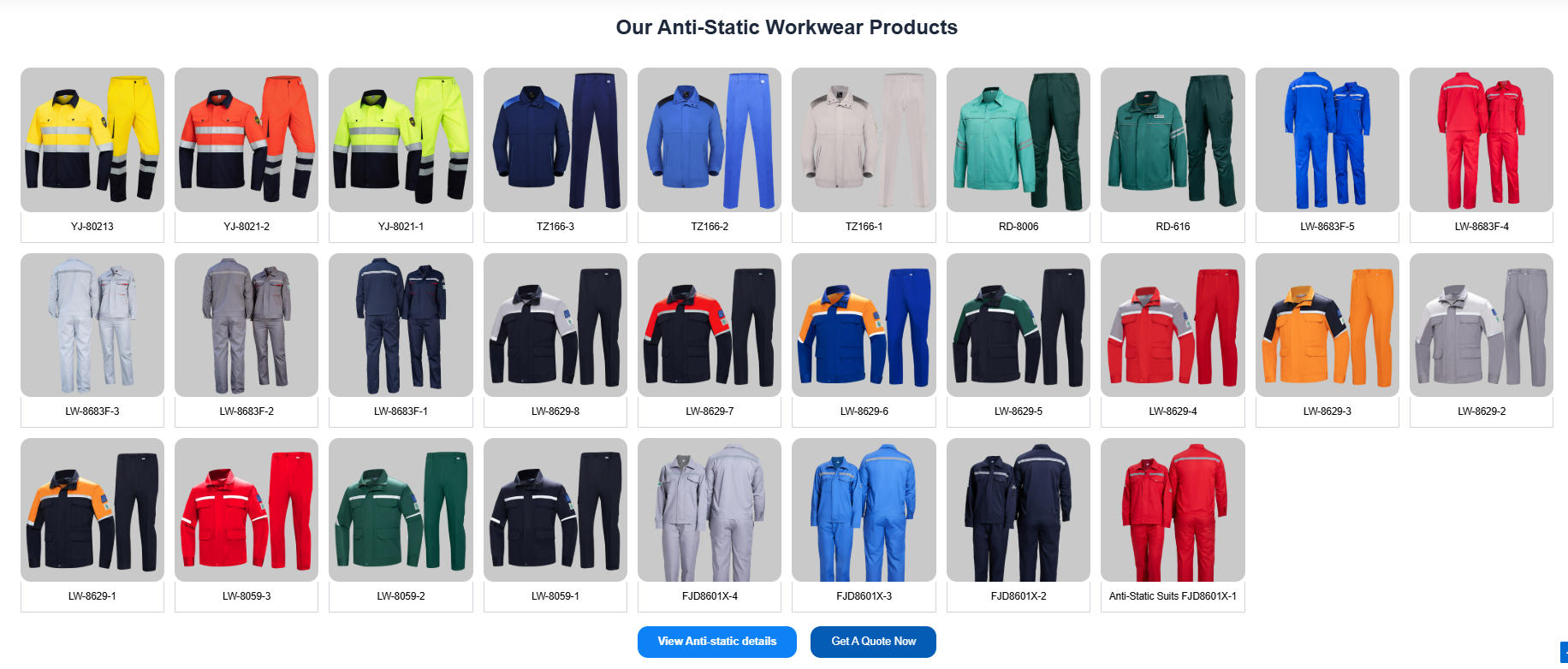
Oil Industry Workwear: Focusing on the highest level of protection, this wear is designed for flammable, static-prone, and harsh working environments—e.g., flame-retardant antistatic (FR) clothing, chemical protective suits, protective gear, and antistatic safety shoes. A key feature is that the fabrics must undergo strict national mandatory certification, and they typically include reflective strips, national mandatory certification marks, and company logos, emphasizing life safety in extremely dangerous environments.
-
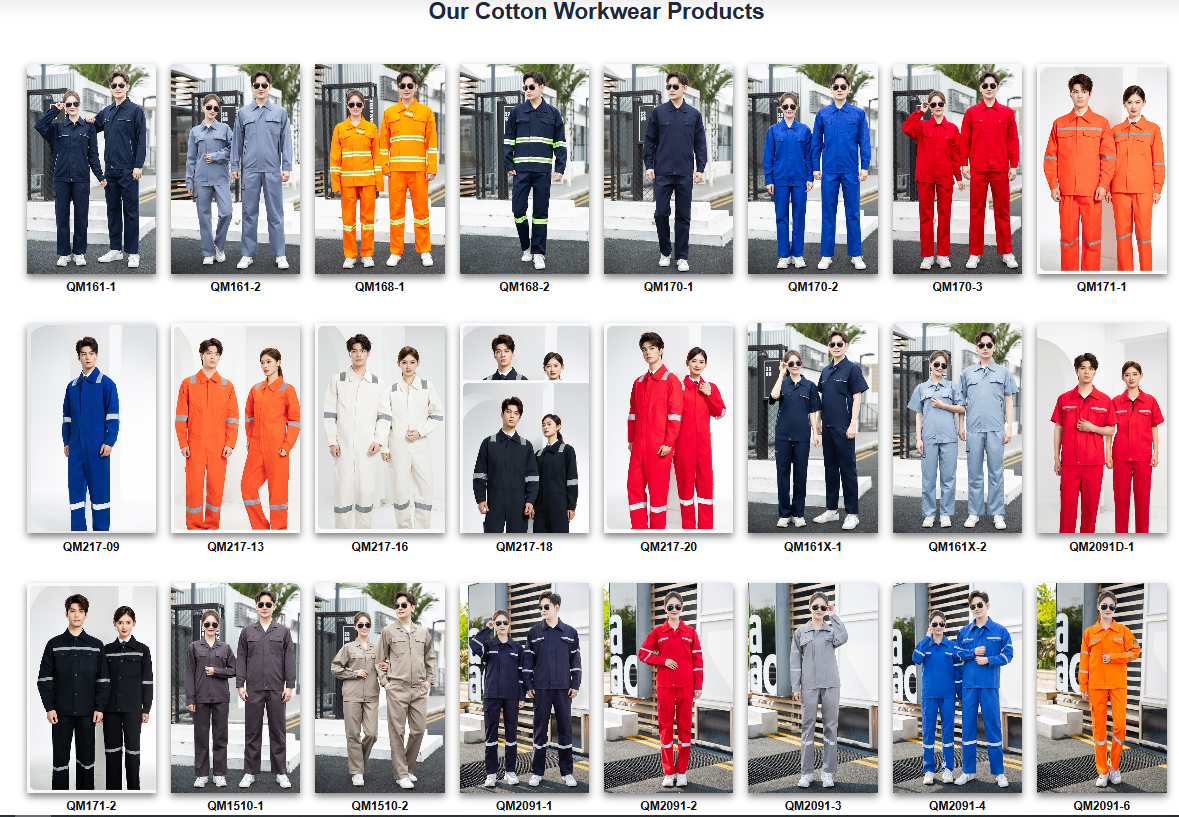
Transportation Industry Workwear: Prioritizing durability, visibility, and a certain level of professionalism, this wearwear covers various scenarios from long-distance driving to logistics handling—e.g., durable work pants/shirts, reflective vests, polo shirts or jackets with the company logo, and non-slip safety shoes. A key feature is the need to adapt to temperature differences between inside and outside the vehicle, and the frequent display of the company brand in prominent positions to enhance brand exposure and driver recognition during transportation.
pure cotton workwear suit -
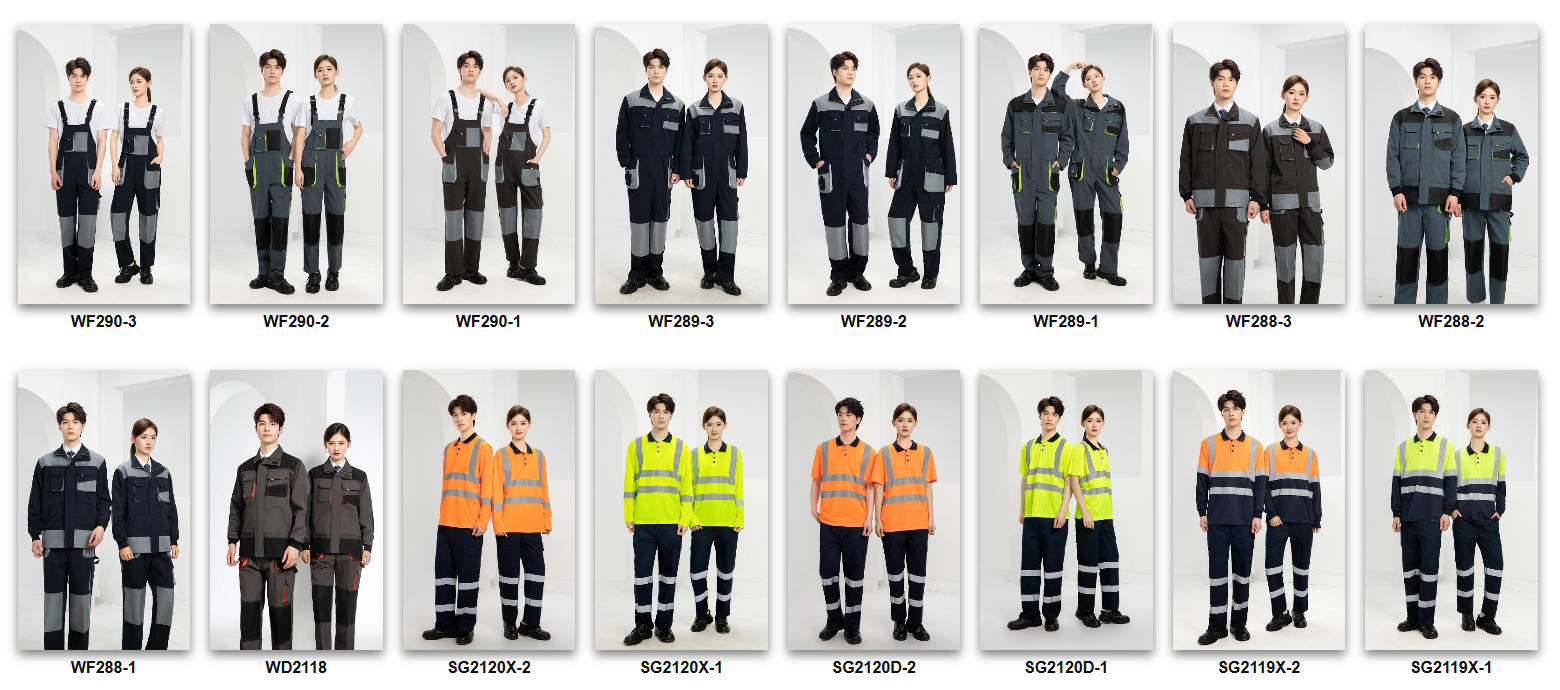
Construction (Management/Technical) Industry Workwear: Balancing a professional business image with the practical needs of construction sites, this wearwear is suitable for engineers, supervisors, and managers—e.g., work shirts with company embroidery, multi-functional vests, durable twill or casual pants, and safety helmets. Its characteristics include greater durability than regular business attire, potentially incorporating reflective elements, allowing for both client meetings in the office and safe, presentable access to construction sites for inspections.
canvas work clothes -
Construction (frontline work) industry workwear: Primarily designed for high-intensity body protection and adaptability to extreme environments, specifically for heavy physical labor—e.g., reinforced knee trousers, abrasion-resistant long-sleeved shirts, high-strength safety shoes, reflective safety vests, and accompanying helmets, goggles, and gloves. Features include extremely durable fabrics, a design that allows for easy movement, and mandatory personal protective equipment (PPE) to address high-risk hazards such as falls, impacts, and cuts.
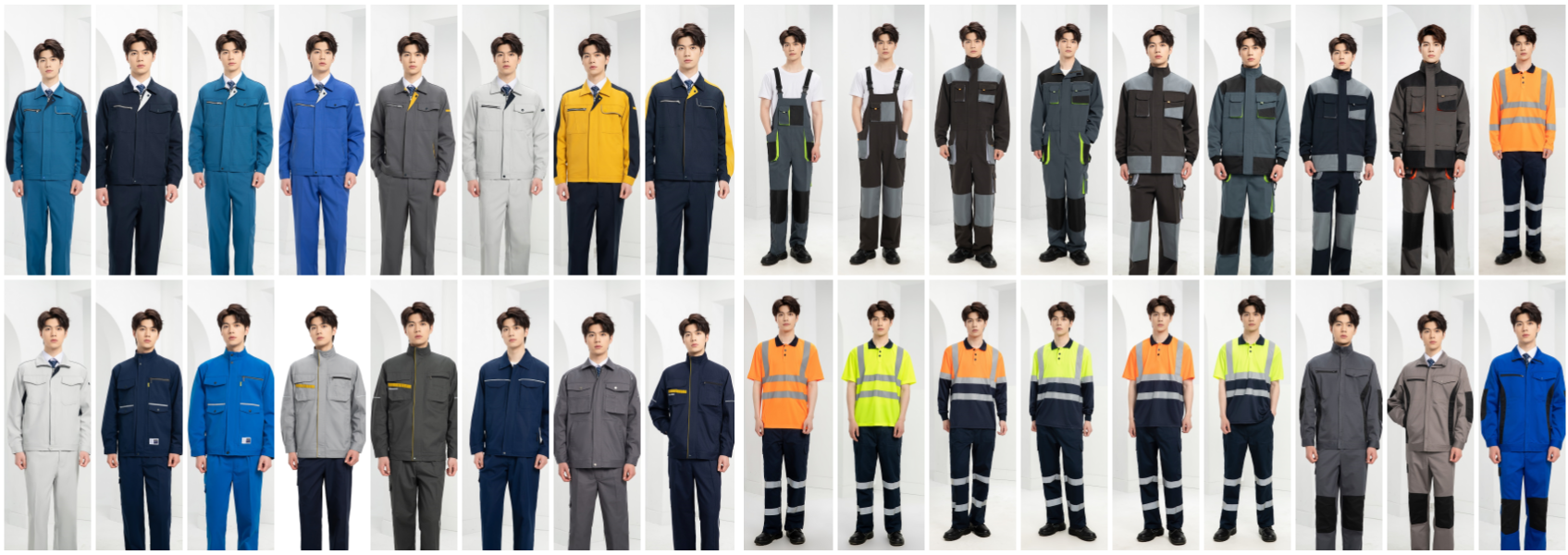
- Maintenance industry workwear: Emphasizing flexibility, stain resistance, and ease of tool carrying, suitable for equipment maintenance, machinery repair, and other similar jobs—e.g., coveralls, multi-pocket trousers, oil-resistant jackets or shirts, and safety shoes with metal anti-slip pads. Its characteristics include clothing typically made of easy-to-clean dark or checkered fabrics to conceal stains, and designed with numerous pockets and loops for storing small tools and parts, facilitating efficient work for technicians.
4. Utility & Tactical Workwear
Blends durability with specialized functionality, often inspired by military gear.
-
Tactical Pants & Vests: Feature numerous pockets, reinforced knees, and durable, quick-dry fabrics for security, law enforcement, and field technicians.
-
Multi-Pocket Vests: Popular among surveyors, photographers, and technicians for carrying tools and small equipment.
polyester cotton labor workwear
5. Food Service & Hospitality-Specific
Designed for hygiene and safety in food handling environments.
-
Chef’s Coats & Checkered Pants: Made from thick cotton to protect against heat and spills, with double-breasted fronts for heat insulation.
-
Hair Nets, Beard Guards, and Aprons: Focus on contamination prevention.
6. Cleanroom & Specialized Environment
Highly controlled clothing to prevent contamination.
-
Cleanroom Suits, Bouffant Caps, and Shoe Covers: Used in pharmaceuticals, microelectronics, and biotechnology to maintain sterile environments.
7. General Purpose & Promotional Workwear
Casual, branded clothing used for low-risk environments or as corporate gifts.
-
Polo Shirts, T-Shirts, and Sweatshirts: Often embroidered with a company logo for corporate events, trade shows, or as casual Friday attire in offices.
Key Factors Influencing Workwear Type:
-
Industry & Job Role: A welder needs FR gear; a nurse needs scrubs.
-
Safety Standards: Often regulated (e.g., ANSI/ISEA standards for Hi-Vis, NFPA for FR).
-
Climate & Environment: Indoor, outdoor, hot, cold, wet.
-
Company Branding: Desire for a professional or unified look.
-
Comfort & Mobility: Essential for productivity and wearer compliance.
In summary, workwear ranges from life-saving protective equipment to brand-building corporate apparel, with the specific type determined by the job’s hazards, environment, and organizational requirements. The modern trend also emphasizes comfort, durability, and multi-functionality across all categories.