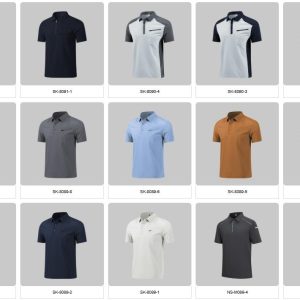
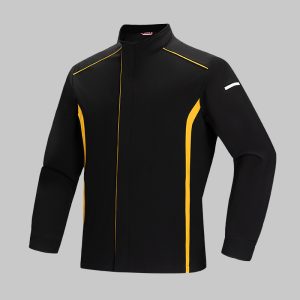
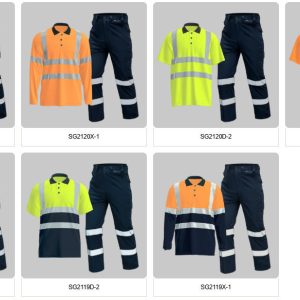
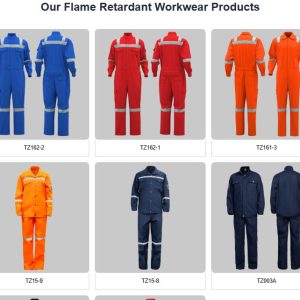
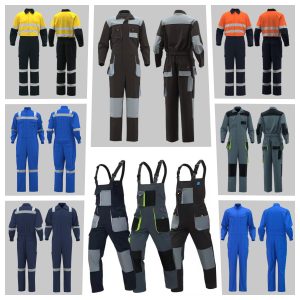
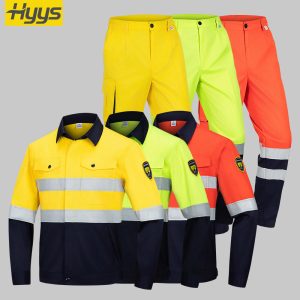
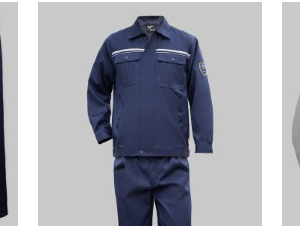
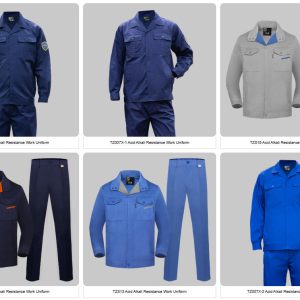
If you are sourcing conti suits for a South African workforce, the buying decision rarely comes down to colour or the lowest quoted unit price alone. Conti suits sit at the intersection of protective clothing regulation, industrial laundry durability and the practical realities of sizing a mixed workforce. South Africa is widely regarded as the most specification-driven workwear market in Africa: buyers use local terminology fluently — conti suit, boiler suit, two-piece overall — and expect the garment to match a named standard, not just a reference photograph. That single characteristic shapes everything from the fabric you specify to the way you brief a supplier.
This guide breaks down the three variables that determine whether a bulk conti suit order succeeds or fails: fabric specification, sizing logic and bulk price structure. It is written for procurement officers, safety managers, workwear distributors and contractors who need a defensible buying decision rather than a catalogue description.
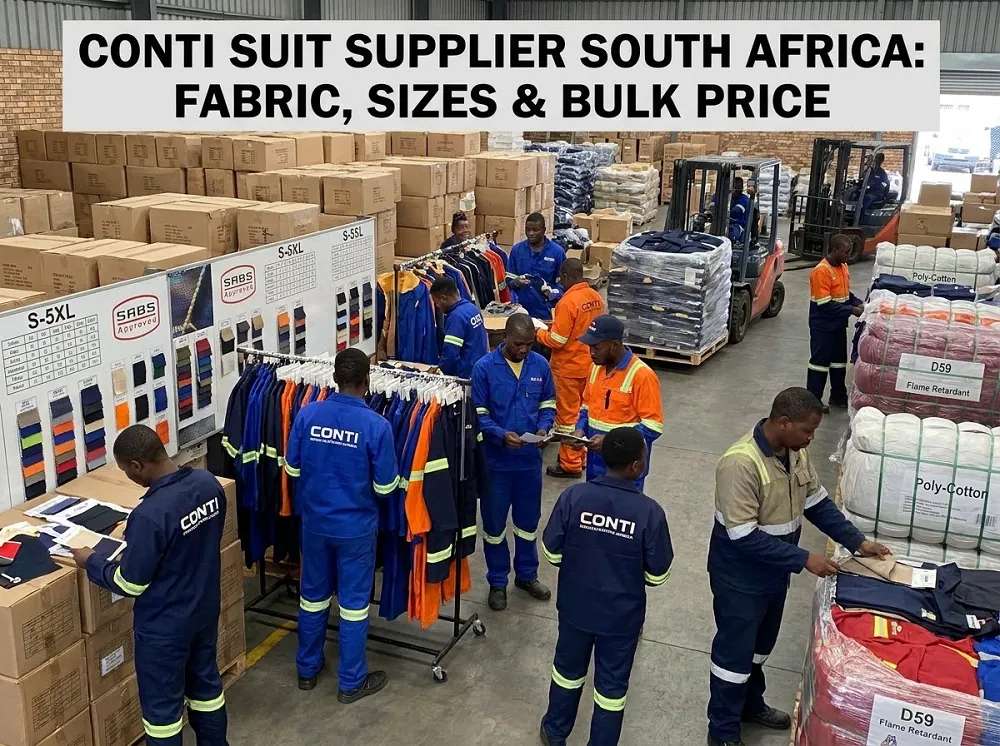
What a “Conti Suit” Actually Means in the South African Supply Chain
A conti suit is a two-piece workwear garment consisting of a matching jacket and trousers, designed for industrial, construction, mining, agricultural and general workplace use. In South African trade usage, the term overlaps with “two-piece overall” and “two-piece workwear suit”. The jacket normally carries an open-neck collar, a front yoke panel, a concealed zip and a Monza-style chest pocket, while the trousers feature an elasticated back waist, belt loops, slanted front pockets and a back pocket.
The distinction matters because conti suits are not generic coveralls. They are a defined garment category with established cut, make and trim requirements — and in South Africa, those requirements are anchored to a national standard.
Fabric: The Specification That Drives Durability and Compliance
Fabric is the first place where a conti suit quotation either holds up or falls apart. Two garments can look identical in a photograph and differ substantially in fibre blend, fabric weight and after-treatment.
Fibre Blend: 80/20 vs 65/35 vs 100% Cotton
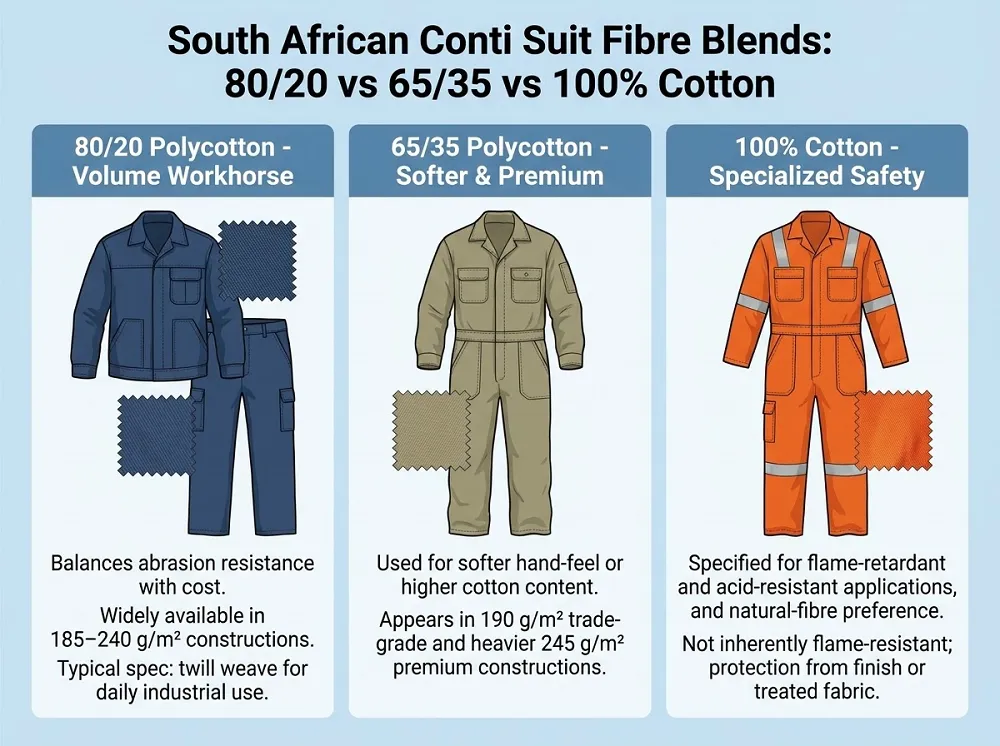
The South African conti suit market is dominated by polycotton blends, with three blends appearing most frequently in bulk orders:
-
80/20 polycotton is the volume workhorse. It balances abrasion resistance with cost and is widely available in 185–240 g/m² constructions. A typical 80/20 specification uses a twill weave and delivers enough strength for daily industrial use.
-
65/35 polycotton is used where a slightly softer hand-feel or a higher cotton content is preferred without moving to a full-cotton garment. It appears in both 190 g/m² trade-grade conti suits and heavier 245 g/m² premium constructions.
-
100% cotton is specified for flame-retardant and acid-resistant applications, and for buyers who require a natural-fibre garment. It is not inherently flame-resistant; the protection comes from the finish or the inherent properties of the treated fabric.
Fibre Blend: 80/20 vs 65/35 vs 100% Cotton
Fabric Weight: What the GSM Number Tells You
Fabric weight is expressed in grams per square metre (g/m² or GSM). In the South African conti suit market, three weight bands are common:
Lightweight: 185–190 g/m². Trade-grade polycotton conti suits at this weight are the most price-competitive option. They are suitable for general workwear, warehousing, logistics and light industrial environments where the garment is not exposed to heavy abrasion or frequent high-temperature laundering. A 190 g/m² polycotton twill conti suit with a concealed zip and Monza chest pocket is a standard reference point in the local market.
Midweight: 210–245 g/m². This band is where most serious bulk buyers land. A 210 g/m² 80/20 polycotton conti suit with triple-stitched seams and reflective tape is a common construction and civils specification. At the upper end, a 245 g/m² 65/35 polycotton twill garment — often paired with YKK metal zips — is positioned as a premium option for manufacturing, logistics and daily on-site wear. A two-tone 80/20 polycotton conti suit at approximately 235–240 GSM is also used for professional uniform programmes where colour-coding by department or site is required.
Heavyweight: 290–320 g/m². This band is almost exclusively associated with flame-retardant and acid-resistant 100% cotton D59 conti suits. A D59 flame-and-acid-resistant conti suit is typically made from 100% cotton at 290–320 GSM, often with reflective tape and a chemically treated finish. The additional weight is functional: it supports the protective finish and the garment’s performance under heat or chemical exposure.
Compliance: SANS 434 and the D59 Specification
South African protective clothing requirements are anchored to SANS 434, the national standard that specifies requirements for the material, cut, make and trim of boiler suits, two-piece workwear suits, bib-and-brace overalls and unlined coats and jackets. The current edition is SANS 434:2023, and it is the benchmark that public-sector and large-corporate tenders reference by name. A conti suit described as “SABS compliant” or “SABS approved” should be traceable to a SANS 434 specification, and buyers should ask for the certificate or test report rather than accepting the term at face value.
For flame and acid environments, D59 is the specification that appears repeatedly in mining and industrial tenders. A D59 conti suit is typically a 100% cotton garment with a flame-retardant and acid-resistant finish, often with reflective tape on the arms and legs, and may carry an SABS permit marking. A recent tender specification for PPE in South Africa called for a conti suit in navy blue or dark indigo, 100% cotton with an SABS-approved D59 W8 finish, chemically treated to repel acids, oils and water, plus heat and spark resistance. That level of specificity is normal in the South African market, and it is why a supplier’s ability to match a named standard is more important than a generic “protective fabric” claim.
For arc-rated applications, tender specifications may call for an ATPV rating — for example, ATPV 12.4 cal/cm² — and a fabric composition such as 88% cotton and 12% nylon, with reflective strips sewn onto elbows and ankles. These garments are a distinct product category from a standard polycotton conti suit and should be quoted as such.
A note on sustainability in 2026 procurement: South African corporate and government tenders increasingly expect evidence to support sustainability claims, not just a statement of intent. Due diligence now goes beyond a basic procurement questionnaire. For a conti suit supplier, that can mean documented fibre origin, OEKO-TEX® certification for the fabric, or a traceable finishing process. A 245 g/m² polycotton conti suit carrying OEKO-TEX® STANDARD 100 certification is one example of a verifiable fabric-level credential that can support a tender response.
Sizes: Why Conti Suit Sizing Confuses First-Time Buyers
Sizing is the second variable that derails bulk orders. The confusion is not random — it comes from a genuine industry convention that is applied inconsistently across brands.
The Core Rule: Jacket and Trousers Are Not the Same Size
In South African conti suit sizing, the set is normally referenced by one size number, but the jacket and trousers are not the same measured size. The prevailing convention is that the trousers are approximately two sizes smaller than the jacket, or equivalently, the jacket is larger than the trouser size by two to four sizes depending on how the brand expresses it.
One widely published retail guide states that conti suits are sized according to pants size, with jackets typically four sizes larger than the corresponding pants — so if you wear a size 34 pants, you need a size 38 jacket. Other suppliers describe the norm as the pants being approximately two sizes smaller than the jacket, with the product sold on the jacket size: a size 34 order means a size 34 jacket and a size 30 pants. Both descriptions point to the same underlying pattern: the jacket and trousers carry different size labels within a single set.
For a buyer, the practical implication is straightforward but easy to miss: do not assume that a “size 36 conti suit” means a 36 jacket and 36 trousers. Confirm with the supplier which component the quoted size refers to, and whether the trousers are two sizes down or four sizes down in that supplier’s grade.
How the Size Number Maps to Body Measurements
Most South African conti suits use UK/Alpha sizing, with the size number corresponding to a chest measurement band. A representative SABS-specification size chart for a 245 g/m² polycotton conti suit shows UK 34 as Small (chest 86–91 cm, waist 71–76 cm), UK 36 as Medium (chest 92–97 cm, waist 77–82 cm), UK 38 as Large (98–103 cm chest, 83–88 cm waist) and so on up to UK 52 as 7XL (chest 140–145 cm, waist 125–130 cm). A two-tone 80/20 polycotton conti suit size chart runs from UK 32 (XS, chest 82–87 cm) through UK 58 (4XL, chest 160–165 cm), illustrating that size availability can extend well beyond standard retail ranges in workwear programmes.
Two practical cautions follow from these charts. First, sizing varies by brand, and a size 38 from one manufacturer may not match a size 38 from another. Second, the waist measurement on a conti suit trouser benefits from an elasticated back, but that does not replace accurate waist sizing — it accommodates movement, not a two-size error.
Building a Size Curve for a Bulk Order
For a workforce order, the size number is less important than the size curve — the distribution of sizes across the order. A common mistake in first bulk purchases is to order a flat quantity per size, which leaves the extremes either overstocked or short. A more reliable approach is to request the supplier’s recommended size curve for the industry and headcount, then adjust based on the actual measurement profile of the workforce. Mining and construction workforces, for example, often require a wider spread at the upper end (UK 48–58), while security and logistics teams may cluster around UK 32–44. A supplier that regularly ships into South Africa should be able to provide a size-curve template rather than leaving the buyer to guess.
Bulk Price: What Drives the Number and Where the Ranges Sit
Bulk conti suit pricing in South Africa is transparent enough to benchmark, but only if you compare like with like. The quoted price per unit is a function of fabric weight, fibre blend, compliance level, trim (zips, reflective tape), branding and order quantity. A 190 g/m² trade polycotton conti suit and a 245 g/m² SABS-specification garment are not interchangeable, and the price gap between them is real.
Benchmark Ranges for Standard Polycotton Conti Suits
At the volume end of the market, a khaki two-piece conti suit in size 32 is listed at R141.00 excluding VAT, with a wholesale price of R126.00. A two-tone polycotton conti suit in khaki, sizes 32–44, is priced from R185.15 to R270.48 including VAT, with a minimum order quantity of 10 units. A trade polycotton conti suit from a workwear wholesaler starts from approximately R187.37, while a budget polycotton conti suit is listed from around R196.29. A 190 g/m² trade polycotton conti suit with reflective arms and legs is priced from R219.37 to R278.29 excluding VAT.
Premium polycotton constructions sit above this band. A premium polycotton conti suit is listed from R319.99 to R362.23 excluding VAT, and a Javlin 4014-PC SABS-specification 245 g/m² polycotton conti suit is priced at R452.32 including VAT. At the specialist end, a flame-retardant and acid-resistant D59 conti suit can be listed at R596.00 excluding VAT, with a wholesale price of R393.00, reflecting the cost of the protective finish and the heavier 100% cotton base fabric.
These ranges are useful as a sanity check, not as a fixed target. A quotation at the bottom of the polycotton band for a garment specified at 245 g/m² with YKK zips and OEKO-TEX® certification should prompt questions about fabric substitution or trim downgrades. Conversely, a quotation at the top of the band for a 190 g/m² trade garment suggests you are paying for something other than the fabric.
What Moves the Bulk Price Up or Down
Several cost drivers sit behind the ranges:
Fabric weight and blend. Moving from 190 g/m² to 245 g/m² increases fabric consumption per garment and usually adds cost. A 65/35 blend at 245 g/m² sits above a 190 g/m² 80/20 trade garment in both material cost and positioning.
Compliance and certification. A SABS-specification garment requires documented conformity to SANS 434, and the testing and traceability behind that documentation carry a cost. OEKO-TEX® STANDARD 100 certification on the fabric is another verifiable credential that distinguishes a premium polycotton conti suit from a trade-grade one.
Protective finishes. Flame-retardant and acid-resistant D59 garments involve a chemically treated fabric and a heavier cotton base, which is why the price per unit can be two to three times a standard polycotton conti suit.
Trim and construction details. YKK metal zips, triple-stitched seams, bar-tacked stress points and reflective tape all add cost. A garment with reflective arms and legs is not the same product as a plain conti suit, and the price difference is visible in the benchmark data.
Order quantity and payment terms. Bulk pricing is tiered. A minimum order quantity of 10 units is common for local wholesale, but container-scale orders — the kind that justify sea freight — sit on a different cost curve. For import-based supply, trial orders may start at 300 pieces, with sea freight from Tianjin to Durban running 26–34 days and quotations available within four working hours SAST. That lead time and order threshold need to be built into any project schedule, especially for date-critical tenders.
Branding. A quoted price for a conti suit typically excludes branding, setup and delivery. A bulk branded budget polycotton conti suit listing explicitly notes that prices exclude setup and branding, delivery and VAT, with a minimum order value of R1,000. When comparing quotes, strip out branding and delivery and compare the garment cost on the same Incoterms and VAT basis.
Supplier Selection: What to Verify Before You Place a Bulk Order
The South African conti suit supply base includes local manufacturers, importers and international workwear factories. Each model has a different risk profile, and the verification questions change accordingly.
Local Manufacturers and Wholesalers
Local manufacturers offer shorter lead times, in-house branding and reflective tape application, and the ability to supply repeat orders from a held fabric lot. A South African overalls manufacturer may offer conti suits in 80/20 polycotton, 65/35 polycotton or 100% cotton, with sizes ranging from 32 to 60 and triple-stitched, bar-tacked construction at stress points. For buyers who need SABS-approved garments, local manufacturers can often provide the relevant conformity documentation and may hold stock of standard sizes.
The trade-off is price exposure to local fabric and labour costs, and less flexibility on highly specialised protective finishes. For standard polycotton conti suits in mid-volume, however, a local manufacturer with a documented SANS 434 specification is a low-friction option.
Import-Based Supply for Container-Scale Orders
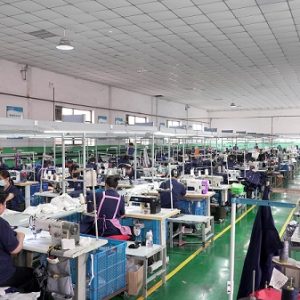
Import supply becomes relevant when the order volume justifies sea freight and when the required specification can be matched to a factory’s existing fabric and construction library. The practical questions for an import supplier are not “do you make conti suits” — most workwear factories do — but “can you match this exact specification, at this fabric weight, with this certification, and hold that specification on repeat orders.”
A supplier with a dedicated South Africa programme is better placed to answer those questions than a generalist exporter. For example, Haiyuan’s workwear and coveralls supply page for South Africa sets out trial orders from 300 pieces, one free sample per style, third-party inspection by SGS, TÜV or Intertek, and sea freight from Tianjin to Durban in 26–34 days, with quotations within four working hours SAST. The same page acknowledges the climate split that matters for fabric selection: a Highveld winter requires insulation, while a KwaZulu-Natal summer requires breathability, and a single fabric for the whole country is the wrong order. That is the kind of market-specific input that separates a specification-capable supplier from a catalogue supplier.
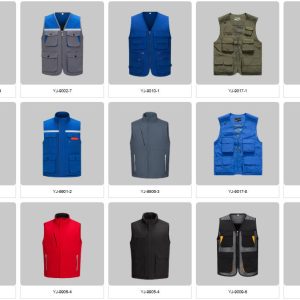
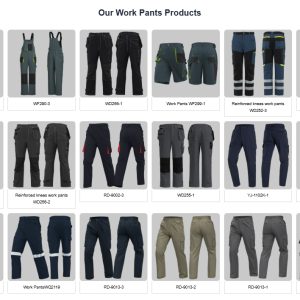
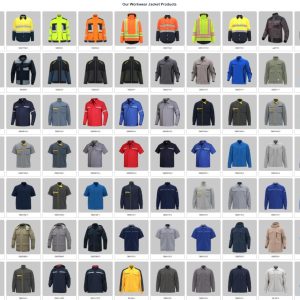
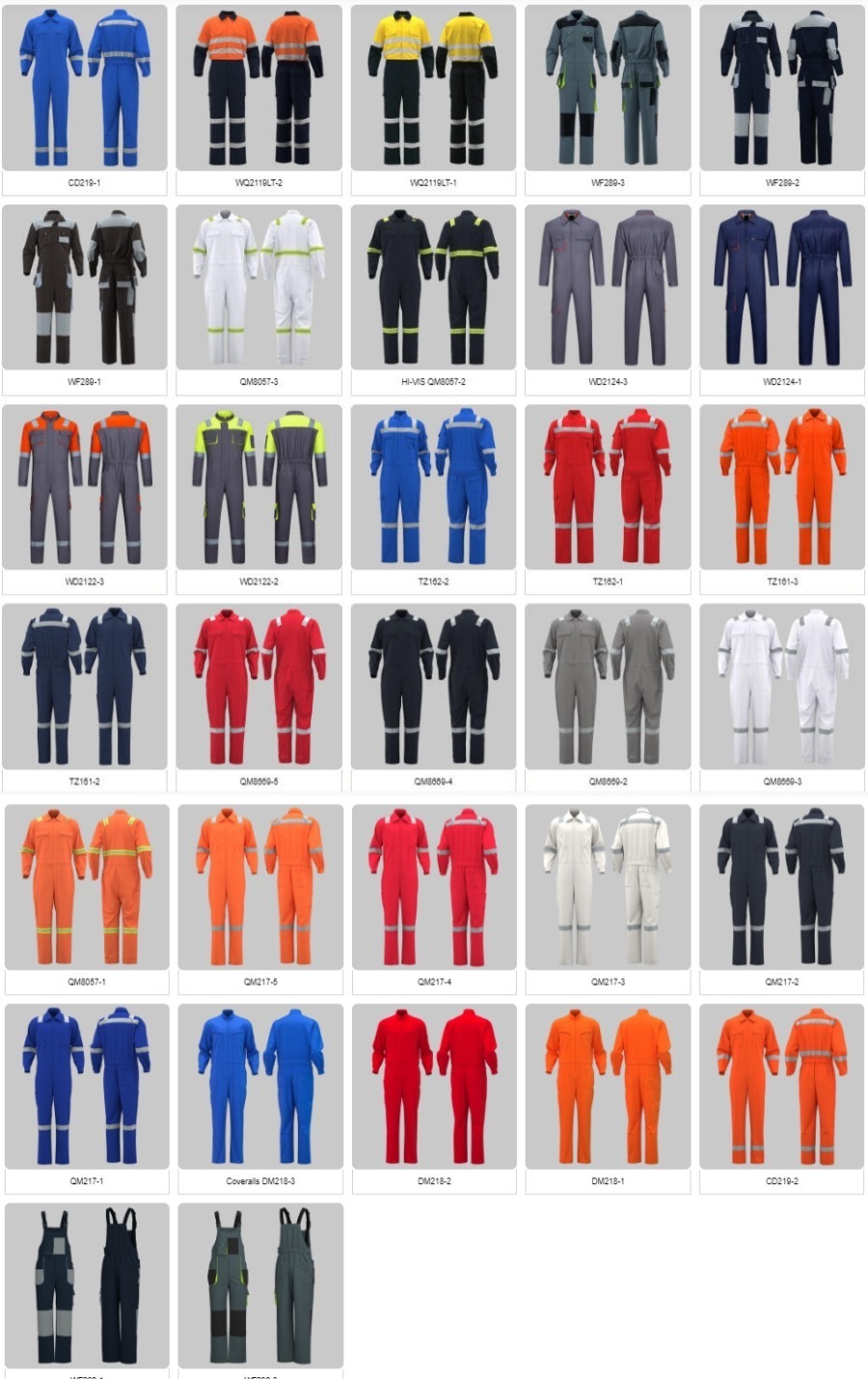
For buyers who want to review the product architecture before opening a specification conversation, Haiyuan’s work uniform suits category covers the two-piece garment format that maps to the conti suit category, while the broader workwear product catalogue lists over 600 styles across work jackets, work pants, coveralls and overalls, high-visibility work uniform, flame-retardant work uniform and anti-static work uniform suits. For a procurement team building a multi-category uniform programme, that breadth reduces the number of suppliers to qualify.
A Due-Diligence Checklist for Any Conti Suit Supplier
Before placing a bulk order, request and verify the following:
-
Fabric specification in writing. Fibre blend, fabric weight in g/m², weave and any after-treatment. “Polycotton” alone is not a specification.
-
Compliance evidence. For SABS or SANS 434 claims, ask for the certificate or test report and confirm which edition of the standard applies.
-
Size chart and size-curve guidance. Confirm whether the quoted size refers to the jacket or the trousers, and how many sizes down the trousers sit.
-
Trim details. Zip brand, seam construction, bar-tacking at stress points and reflective tape specification, if applicable.
-
Bulk pricing basis. Confirm what is included and excluded — branding, delivery, VAT, setup — and the minimum order quantity and order value.
-
Lead time and shipping terms. For imports, confirm the production lead time separately from the sea freight transit time, and build slack for port congestion.
-
Repeat-order capability. Ask how the supplier holds fabric lots or colour continuity for repeat orders, especially for security and mining contracts where uniform consistency matters more than the lowest unit price.
Frequently Asked Questions
What is the difference between a conti suit and a boiler suit? A conti suit is a two-piece garment — jacket and trousers — while a boiler suit is a one-piece coverall. Both are covered by SANS 434, but they serve different work environments and are sized differently.
Is 190 g/m² polycotton suitable for mining work? Lightweight 190 g/m² trade conti suits are generally not the first choice for underground mining or heavy industrial laundering. Mining specifications more commonly call for heavier polycotton, 100% cotton D59 flame-and-acid-resistant garments, or arc-rated conti suits with a defined ATPV rating.
Why is the jacket a different size from the trousers? The convention reflects the way conti suits are cut and worn: the jacket is designed to layer over base clothing and allow freedom of movement across the shoulders and chest, while the trousers are sized closer to the waist. The result is that the jacket carries a larger size label than the trousers in the same set.
Can I order a mixed-size bulk order? Yes, and for workforce orders you should. A mixed-size order based on a size curve is more reliable than a flat quantity per size, but confirm the supplier’s minimum order quantity per size and whether mixed sizes affect the unit price.
What does “SABS approved” actually mean on a conti suit? It should mean the garment conforms to a named SANS specification — most commonly SANS 434 for general protective clothing, or the D59 specification for flame-and-acid-resistant garments. Ask for the certificate or test report and check the standard and edition referenced.
How long does a bulk conti suit order take? Local wholesale orders can ship from stock within days. Import orders involve a production lead time plus sea freight; for a South Africa-bound container, the sea leg alone from Tianjin to Durban is typically 26–34 days, before port clearance and inland transport.
Conclusion: Buy the Specification, Not the Photograph
The South African conti suit market rewards buyers who specify precisely. Fabric weight and blend determine durability and compliance; the jacket-to-trouser sizing convention determines fit; and the bulk price only makes sense once the first two variables are fixed. A supplier that can match a named standard, provide a documented size chart and quote on a transparent bulk basis is worth more than a quotation that is ten rand cheaper per unit but cannot answer a tender specification.
For buyers comparing local manufacturing against container-scale import supply, the decisive questions are the same: can you match the fabric specification, can you evidence the compliance, and can you repeat the order without the colour or construction drifting? Start with a documented specification, request a sample against that specification, and let the price follow the product — not the other way around.