If you have ever received two quotations for the same “overall” brief and found one priced for a one-piece garment and the other for a two-piece set, you have already met the central terminology problem in South African workwear. The two garments look similar in a photograph. They are not the same product, they do not follow the same sizing logic, and they protect the wearer in different ways. In South Africa, the distinction is not academic: procurement specifications, tender documents and safety files use “boiler suit” and “conti suit” as separate categories, and using the wrong term in a brief is one of the fastest ways to receive a quotation for the wrong garment.
This guide sets out what each term means in South African trade usage, how the two garments differ in construction, sizing and protective performance, and how to decide which one a given workforce actually needs.
The Short Answer, Before the Detail
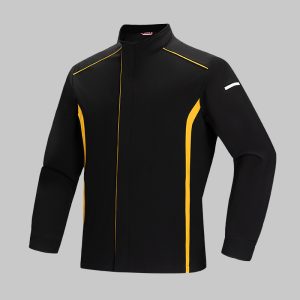
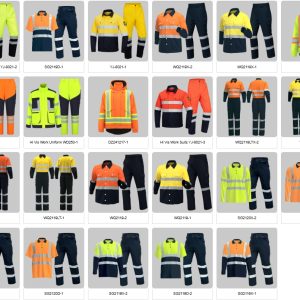
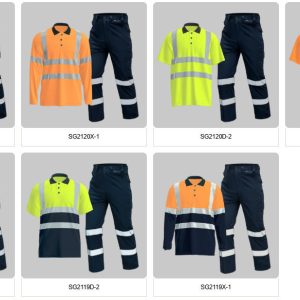
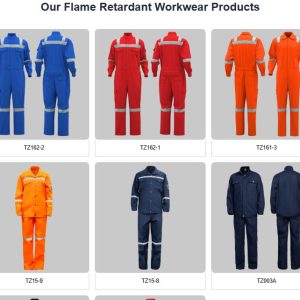
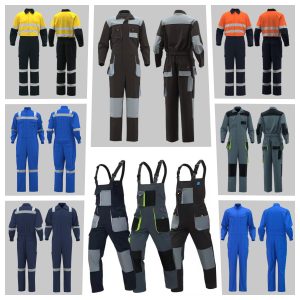
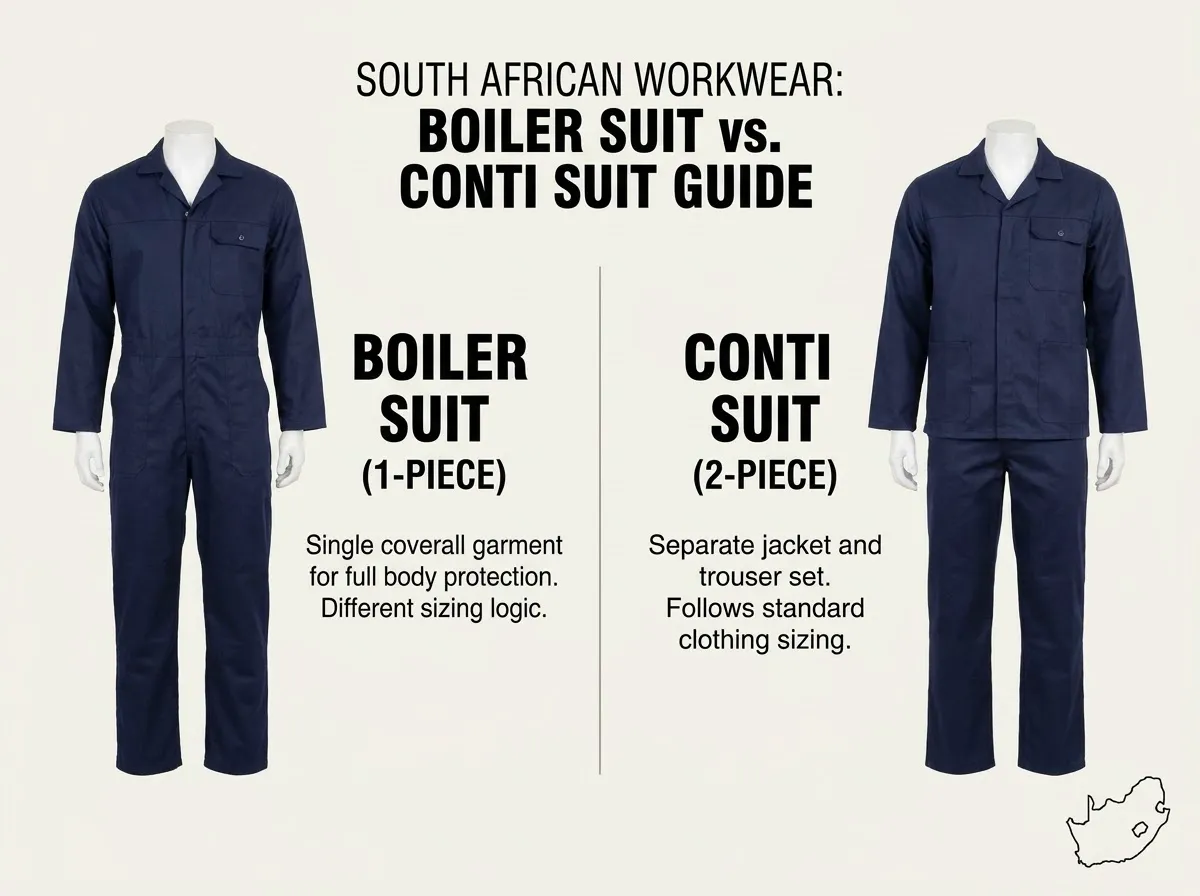
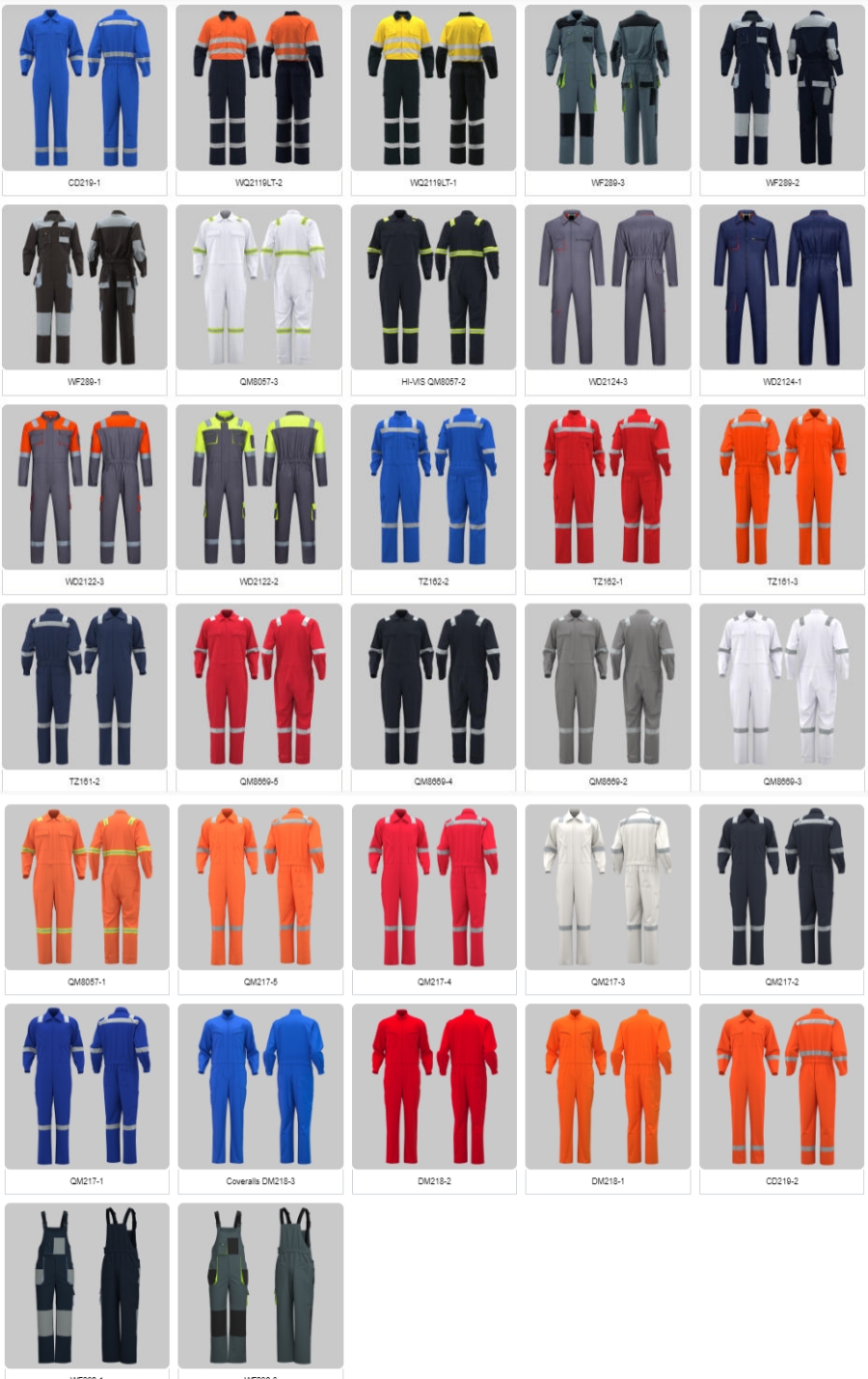
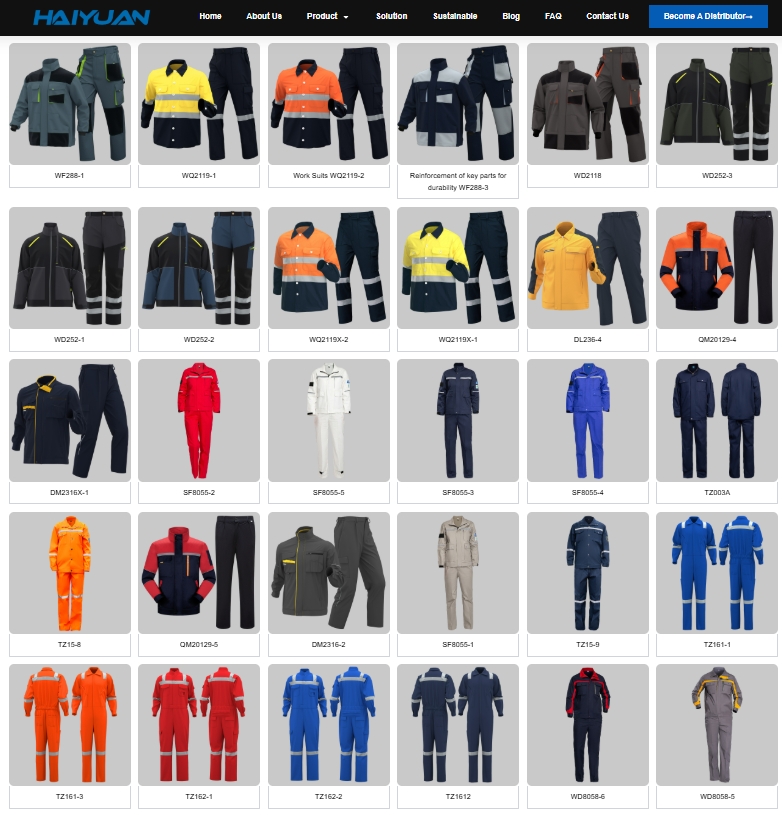
A conti suit is a two-piece workwear garment: a matching jacket and trousers, sold as a set. A boiler suit is a one-piece garment — a full-body coverall with sleeves, legs and a front closure, worn as the primary layer. That is the core distinction, and it holds across the South African market.
The terms are not interchangeable, even though both fall under the same national standard. SANS 434:2023, the South African standard for general protective clothing, specifies requirements for the material, cut, make and trim of both boiler suits and two-piece workwear suits — along with bib-and-brace overalls and unlined coats and jackets. The standard treats them as related but distinct garment types, with separate clauses for the “make of boiler suits” and the “make of workwear suits”. That structure is a useful signal for buyers: the garments share a regulatory family, but they are not substitutes for one another.
Where the Confusion Comes From
The terminology overlap has three sources, and understanding them makes the market easier to read.
The first is the word “overall.” In South African usage, “overall” can refer to a one-piece boiler suit, a two-piece conti suit, or bib-and-brace overalls depending on the supplier and the industry. A tender document may list “overalls/boiler suits” as a single line item category, while a separate line item specifies “two-piece conti suits”. The word alone does not resolve the garment type.
The second is international English. In British and American English, “boiler suit” and “coverall” are often used interchangeably for a one-piece garment. That usage is consistent with South African usage for the one-piece form. The confusion arises when an international catalogue describes a two-piece set as a “coverall” or an “overall,” which does not match the South African conti suit convention.
The third is the retail product page. A product titled “Conti Suit” on a South African site should be a two-piece set, but buyers occasionally encounter listings where the photographs show a one-piece garment or the description mixes the two. The defence is to confirm the construction in writing — “two-piece jacket and trousers” or “one-piece coverall” — rather than relying on the title alone.
Structural Differences That Change the Buying Decision
The difference between one piece and two pieces is not cosmetic. It changes how the garment is sized, how it is replaced, how it performs in heat, and where it fails.
The Conti Suit: Two Pieces, Replaceable Halves
The conti suit is the volume workwear format in South Africa. The two-piece construction means the jacket and trousers can be replaced separately when one half wears out, and the top and bottom can be sized independently for workers whose chest and waist measurements do not sit in the same proportion. A worker who wears out trouser knees long before the jacket shoulders can replace only the trousers, which lowers the total cost of ownership over a multi-year uniform programme. The jacket can also be removed in heat, which matters in a country with the climate range of South Africa: a Highveld winter and a KwaZulu-Natal summer do not call for the same garment behaviour.
The trade-off is the waistline. A two-piece garment has a gap where the jacket meets the trousers, and in work where dust, debris or overspray falls from above, that gap is a pathway for material to reach the base clothing underneath.
The Boiler Suit: One Piece, Continuous Coverage
A boiler suit closes the waistline. There is no horizontal gap between top and bottom, which is why one-piece coveralls are the default choice for spraying, insulation work, overhead work and any task where dust or debris would otherwise settle at the waist of a two-piece. The continuous shell also means fewer openings for material to enter, which is relevant in dusty mining and construction environments where the garment is the primary barrier rather than a uniform layer.
The trade-off is flexibility. A boiler suit is one garment, so a worn knee or a torn sleeve cannot be replaced without replacing the whole suit. It is also warmer than a two-piece because the torso is covered continuously, and bathroom access requires undoing the front closure rather than simply removing a jacket.
Sizing: The Rule That Catches First-Time Buyers
Sizing is where the conti suit and boiler suit diverge most sharply in South African practice, and where a specification error becomes a fit problem across an entire workforce order.
Boiler Suit Sizing: Chest-Based
A boiler suit is measured on chest size. The garment is sized as a single unit, so the chest measurement drives the fit, and the size number on the label corresponds to a chest band rather than a waist measurement. A size range for a D59 mining boiler suit, for example, may run from size 30 to 64, expressed as chest sizes.
Conti Suit Sizing: Jacket Size Drives the Set, Trousers Sit Two Sizes Down
A conti suit is also measured and sold on the jacket size, but the trousers in the set are not the same size as the jacket. The industry norm in South Africa is that the trousers are approximately two sizes smaller than the jacket, and the set is sold on the jacket size. A size 34 conti suit therefore means a size 34 jacket and a size 30 trousers. Some supplier guidance expresses the same relationship in centimetres: conti suit jackets are about 10 cm larger than the trousers in accordance with SANS specifications.
The practical consequence is that a buyer who orders “size 36 conti suits” is ordering 36 jackets and 34 trousers, not 36 of each. That is correct for the garment type, but it is a problem if the buyer assumes a conti suit is sized like a pair of trousers or like a boiler suit. For a workforce order, the size curve should be built on jacket sizes, with the trouser size derived from the supplier’s stated differential rather than assumed.
Why the Difference Exists
The conti suit differential reflects the way the garment is cut and worn. The jacket is designed to layer over base clothing and allow movement across the shoulders and chest, so it carries a larger size label. The trousers are cut closer to the body at the waist. The boiler suit has no such split: the chest measurement governs the whole garment, and the waist is shaped within that single size.
For a procurement officer, the safe rule is to ask two questions of every supplier: Is this garment one piece or two? And which component does the quoted size refer to? The answers determine whether the size curve you submit will fit the workforce you are outfitting.
Protection and Compliance: Same Standard, Different Risk Profiles
Both garment types can be specified to SANS 434, and both can be produced in flame-retardant and acid-resistant versions. The difference is in how the construction interacts with the hazard.
General Protective Clothing
In standard polycotton or 100% cotton constructions, the conti suit is the general industrial workhorse. It is the usual choice for construction, general manufacturing, warehousing, logistics and maintenance, where the garment is a durable uniform layer rather than a sealed barrier. The boiler suit is preferred where the work generates dust, overspray or overhead debris, or where the worker is in a pit, under a vehicle, or in a position where a two-piece waist gap would collect material.
Flame, Acid and Mining Specifications
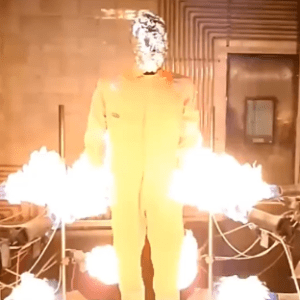
Where flame or acid resistance is required, both garment types appear in South African specifications, but the one-piece boiler suit has a strong presence in mining and heavy industrial applications. The D59 specification is the reference point: a 100% cotton drill fabric to SANS 1387-4, typically around 270 g/m², with a flame-retardant finish and an SABS permit marking in compliant garments. D59 mining boiler suits are a distinct product category in the South African market, alongside D59 conti suits, and the boiler suit form is often specified for underground and dusty mining environments where continuous coverage is valued.
For acid and flame applications, the fabric weight often rises to 300–320 g/m² in a 100% cotton D59 construction, and reflective tape on arms and legs is a common upgrade for night shift and low-light work. The boiler suit’s one-piece construction means the protective fabric is continuous across the torso, with no waist seam to interrupt the barrier. The conti suit achieves a comparable fabric specification but relies on the overlap between jacket and trousers at the waist, which is why fit and jacket length matter more in a two-piece protective garment.
The Arc-Rated and Specialist Layer
For electrical arc hazards, neither a standard polycotton conti suit nor a standard boiler suit is sufficient. Arc-rated garments are a separate specification, with an ATPV rating expressed in cal/cm², and they should be quoted against that rating rather than against a generic “flame retardant” description. The garment type may still be a one-piece coverall or a two-piece suit, but the fabric and certification are the defining features.
How South African Workwear Suppliers Present the Two Categories
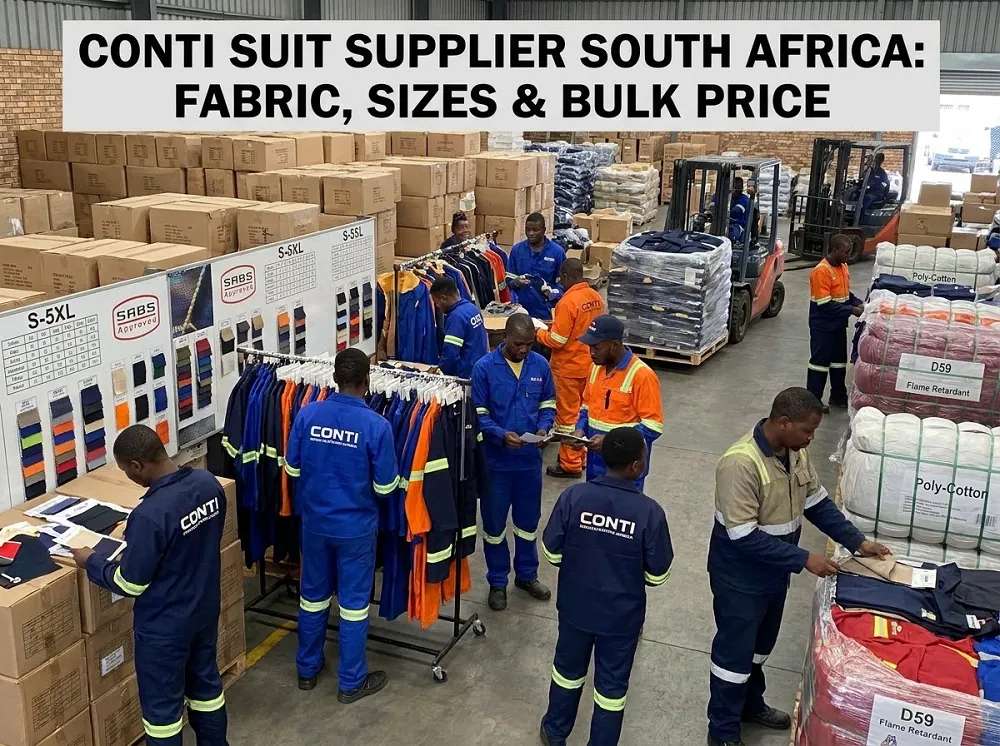
The local supply market is organised around the distinction. South African distributors and manufacturers list conti suits and boiler suits as separate product families, often with separate size charts and separate fabric options. A workwear distributor may stock Dromex 65/35 polycotton conti suits cut to SANS 434 fit alongside D59 flame and acid boiler suits, treating the two as different procurement lines rather than variants of one product. A packaging and industrial supplier serving Gauteng describes conti suits as “the South African industrial standard” while positioning boiler suits for dusty and dirty work where debris would enter a two-piece at the waist.
That market structure is useful for buyers because it means the terminology is not an obstacle to be overcome — it is the vocabulary the supply chain already uses. A brief that specifies “two-piece conti suits, SANS 434, 80/20 polycotton, jacket sizes 32–52” will be understood by a South African supplier without translation. A brief that says “overalls” will generate clarifying questions, and the answers may not match what the buyer intended.
For buyers comparing local supply against import-based sourcing, the terminology question becomes a specification question. An international workwear factory that serves the South African market needs to understand that a conti suit is a two-piece set sized on the jacket with trousers two sizes down, and that a boiler suit is a one-piece garment sized on the chest. A supplier that treats both as “coveralls” will produce a quotation that looks competitive but does not match the garment the workforce needs. Haiyuan’s coveralls and boiler suits product page presents the one-piece format in those terms, while the South Africa workwear supply page sets out the conti suit and boiler suit categories side by side for buyers who are sourcing against local terminology rather than generic international catalogue names.
A Practical Decision Framework
The choice between a boiler suit and a conti suit can be reduced to four questions, applied in order.
Question 1: Is the hazard dust, debris or overspray from above, or is it general dirt and abrasion? If material falls from above or the worker is in a position where a waist gap would collect it, the boiler suit’s continuous coverage is the stronger choice. If the hazard is general industrial dirt and abrasion, the conti suit is sufficient and more flexible.
Question 2: Does the workforce need to shed layers in heat, or replace worn halves separately? If yes, the conti suit’s two-piece construction is the practical advantage. If the garment is replaced as a unit and heat management is handled through fabric choice rather than garment removal, the boiler suit’s one-piece form is not a disadvantage.
Question 3: What does the safety specification say? If the tender or safety file names D59, SANS 434 with a specific garment type, or an arc rating, the garment type is already determined. Read the specification before choosing the format, not after.
Question 4: What is the size profile of the workforce? A workforce with a wide spread between chest and waist measurements is easier to fit in a conti suit, because the top and bottom are sized independently. A workforce that clusters around a consistent chest-to-waist proportion can be fitted in a boiler suit with a single chest-based size. For either garment, request the supplier’s size chart and, for conti suits, confirm the jacket-to-trouser differential in writing.
Common Buying Mistakes and How to Avoid Them
Mistake 1: Using “overall” as the specification. The word does not distinguish one piece from two. Specify “one-piece boiler suit” or “two-piece conti suit” in the brief.
Mistake 2: Assuming a conti suit is sized like a pair of trousers. A conti suit is sold on jacket size, and the trousers are two sizes down. Build the size curve on jacket sizes and confirm the differential with the supplier.
Mistake 3: Applying boiler suit sizing to a conti suit, or vice versa. A boiler suit is sized on the chest as a single unit. A conti suit is sized on the jacket, with a separate trouser size. The two size charts are not interchangeable.
Mistake 4: Assuming “flame retardant” means the same thing across both garment types. The fabric specification and the garment construction both matter. A D59 boiler suit and a D59 conti suit may share a fabric standard, but the protective performance at the waist depends on fit and overlap in the two-piece version. Confirm the full garment specification, not only the fabric.
Mistake 5: Ordering one garment per worker for a dirty job. A single conti suit or boiler suit per worker assumes the garment can be washed and returned before the next shift. In practice, two sets per worker is the minimum so one can be in the wash, and three is common where the work is dirty enough that a suit does not last the week. The unit price is only one part of the cost; the number of sets per worker determines the actual programme cost.
Frequently Asked Questions
Is a conti suit the same as a boiler suit? No. A conti suit is a two-piece jacket and trousers set. A boiler suit is a one-piece full-body coverall. Both are covered by SANS 434, but they are separate garment categories with different sizing and different protective behaviour.
Why is a conti suit sold on jacket size if the trousers are smaller? The jacket is the larger component and the one that determines the upper-body fit. The industry convention is to quote the jacket size and supply trousers approximately two sizes smaller, so the set is identified by the jacket measurement.
Can a boiler suit be used for the same work as a conti suit? In general industrial work, yes, with the trade-offs already described: a boiler suit is warmer and cannot have one half replaced, but it closes the waist gap. In dusty, overhead or pit work, the boiler suit is often the better choice. In heat or where replacement cost matters, the conti suit is often the better choice.
Are both garments available in flame and acid resistant versions? Yes. D59 flame and acid specifications exist for both boiler suits and conti suits in the South African market, and both can be specified to SANS 434. The fabric specification and the garment construction should be confirmed separately.
How do I specify the right garment in a tender? Use the construction term, not the generic word. “Two-piece conti suit, jacket sizes 32–52, trousers two sizes down, SANS 434, 80/20 polycotton” is a specification. “Overalls” is a category heading.
Conclusion: The Term Is the Specification
In South African workwear, the choice between a boiler suit and a conti suit is not a matter of brand preference or price tier. It is a choice between one-piece continuous coverage and two-piece replaceable flexibility, and that choice carries through to sizing, fit, protective performance and the total cost of a uniform programme. The terminology is precise because the garments are different, and the buyers who get the best outcome are the ones who use the terms as the starting point of the specification rather than as a label applied after the order is placed.
For buyers sourcing against South African terminology, Haiyuan’s work uniform suits category covers the two-piece format that maps to the conti suit, while the coveralls and boiler suits product page covers the one-piece format. The practical next step is to confirm which construction the workforce actually needs, write that construction into the brief, and ask the supplier to quote against the named standard rather than a generic garment name.